Correcting the record: restoring the visibility of artists in the modern Arabic book
Daniel Lowe
06.07.2026
While Decolonizing the Page highlights the diverse range of artists, illustrators, calligraphers, designers, and printers who shaped the modern Arabic book, their contributions have remained largely invisible in library collections until recently. Through their cataloguing, conservation, and collecting practices, libraries have historically privileged the accumulation, preservation and retrieval of texts over the visual, design and material aspects of modern printed books. This essay takes the British Library’s printed Arabic book collection as an example.1
Cataloguing modern books
Today, digital records in online catalogues mediate the discoverability, visibility, and accessibility of modern Arabic printed books held in the British Library’s collection.2 However, many of the artists and designers involved in their production did not feature in the catalogue until recently. Unlike more detailed and expansive codicological and bibliographic descriptions for manuscripts and rare printed materials that view the book as a material object carrying text and record the multiple hands responsible for their production,3 cataloguing practices for twentieth-century books have largely been text-centric, prioritizing the retrieval of books through the name of the primary author over other contributors.
There are several reasons for this. Prior to the introduction of digital cataloguing systems, records for many of the British Library’s twentieth-century Arabic books were hand or typewritten on cards4 which were stored in cabinets or published as catalogues, acting as finding aids for readers.5 Catalogue cards afforded limited space for description and only what was considered to be core bibliographic data—such as the author, title, publisher, place, date, edition, and series—was recorded. As a result, artists, illustrators, designers, calligraphers and printmakers were rarely, if at all, included in records and, oftentimes, the presence of illustrations was not even recorded (Figs. 1 and 2). Although modern cataloguing systems and standards now allow for more expansive description with multiple access points for discovery, many entries found in library databases have been largely derived directly from legacy analogue records with only limited enhancement.
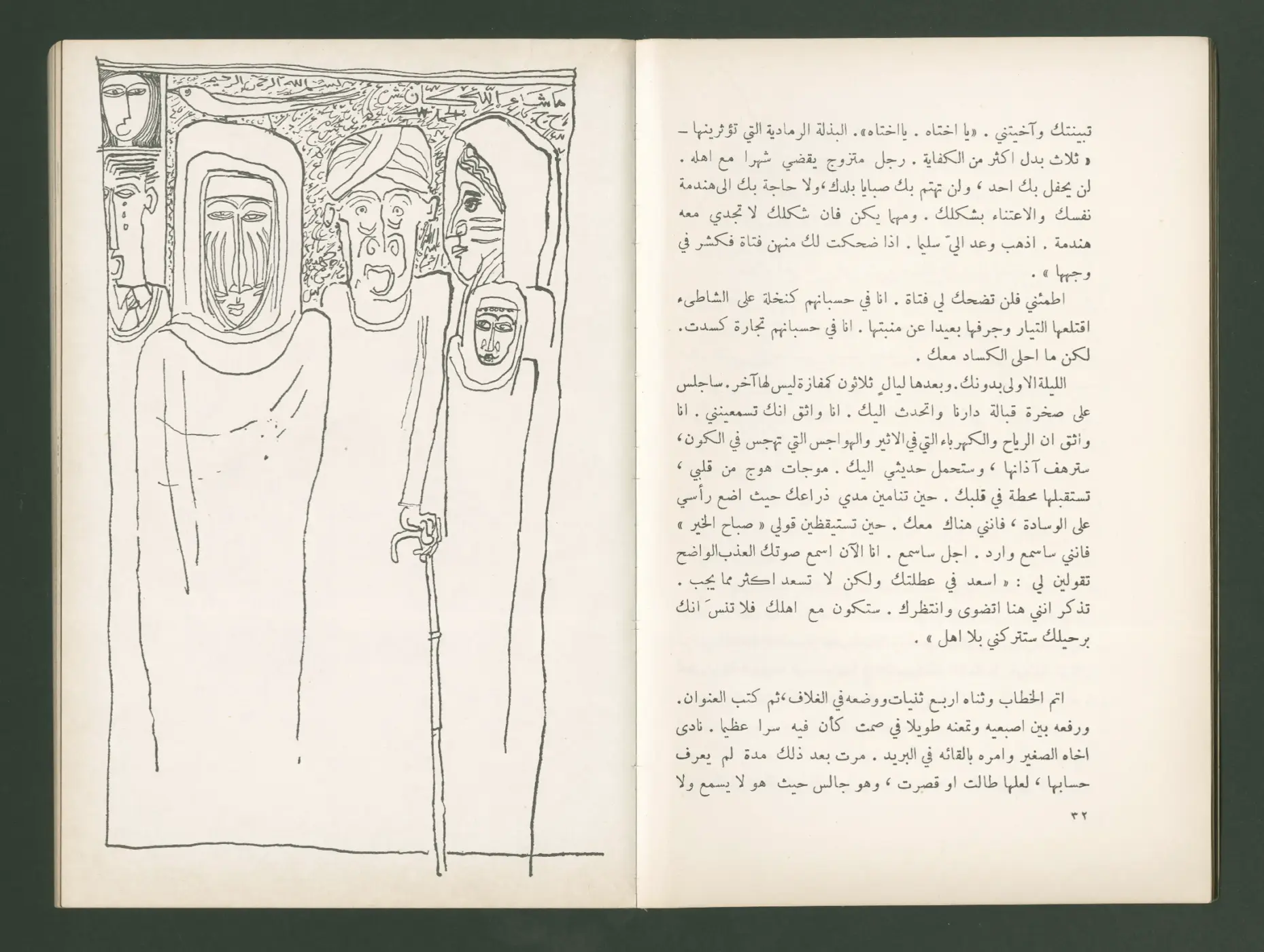

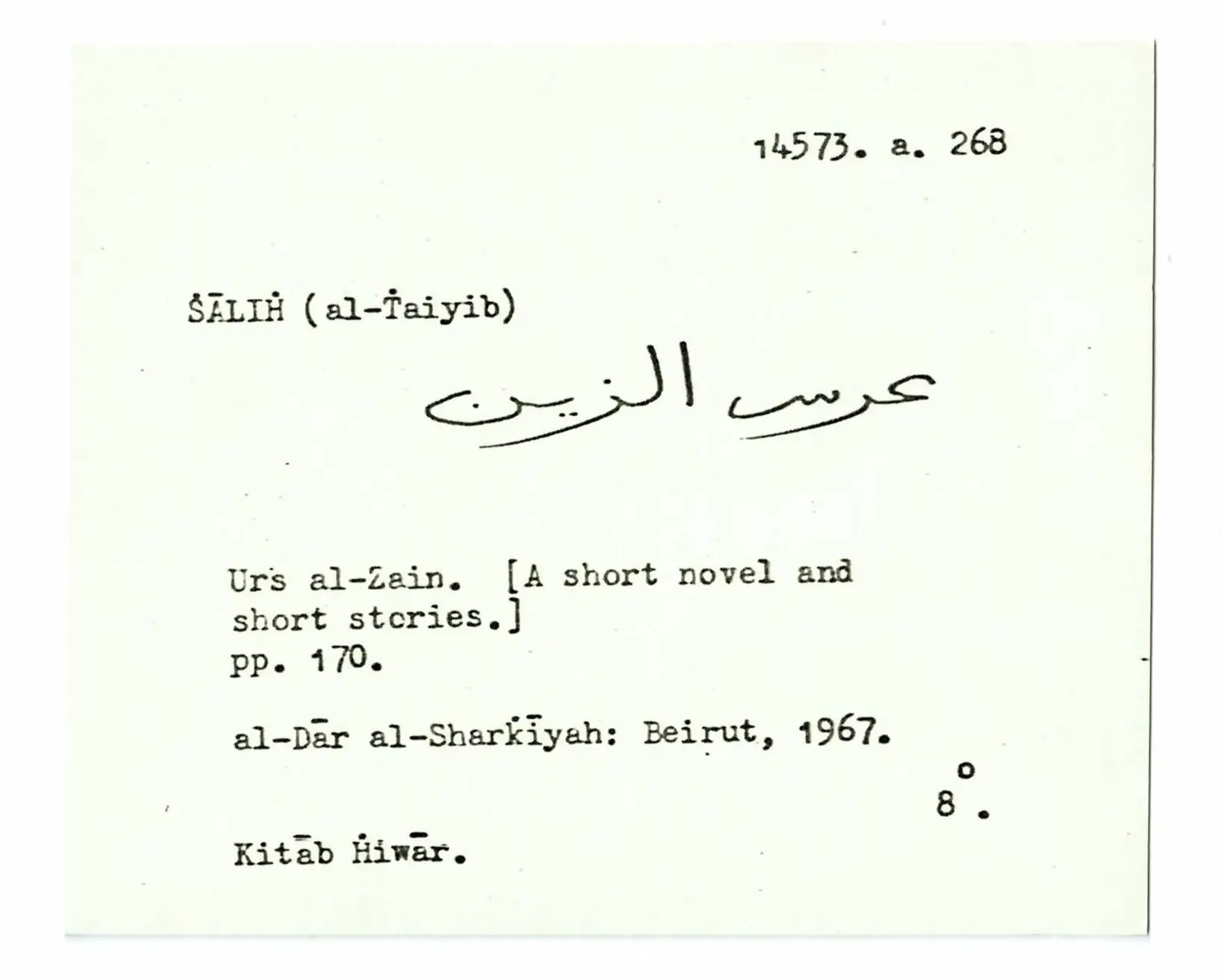
Even when re-cataloguing or new cataloguing is undertaken, the choice to include or omit information considered beyond core bibliographic data is left to ‘cataloguer’s judgement’. Such judgement does not operate in a vacuum and reflects broader institutional and intellectual assumptions about what is and is not bibliographically significant. Current cataloguing practices often reflect a continuation of the past but are also informed by the relatively limited attention accorded to modern Arab art and design compared to scholarship on more traditional forms of Islamic art production. The contributions of artists, designers, calligraphers, and printers are still considered supplementary rather than integral to the book itself and, as a result, are rarely recorded. Arguably, the absence of such information in library catalogues has, in turn, obscured and marginalized the role of artists and designers in the production of the modern Arabic book and solidified a notion that the art of the Arabic book is only concerned with pre-modern manuscripts.
Enhancing catalogue records is therefore an important process in redressing this imbalance. However, inscribing these hitherto absent names into the catalogue by updating legacy records is not always an easy task. In the case of the British Library’s modern Arabic books, most are not shelved in London where cataloguing is undertaken. Rather, they are housed in a low-oxygen automated mass-storage facility in Yorkshire, around 325 kilometres away. Therefore, assessing their visual aspects, such as cover design and illustrations, requires each volume to be requested individually and transported to London, which makes retrospectively updating catalogue records with the book in hand a slow and resource-intensive process.
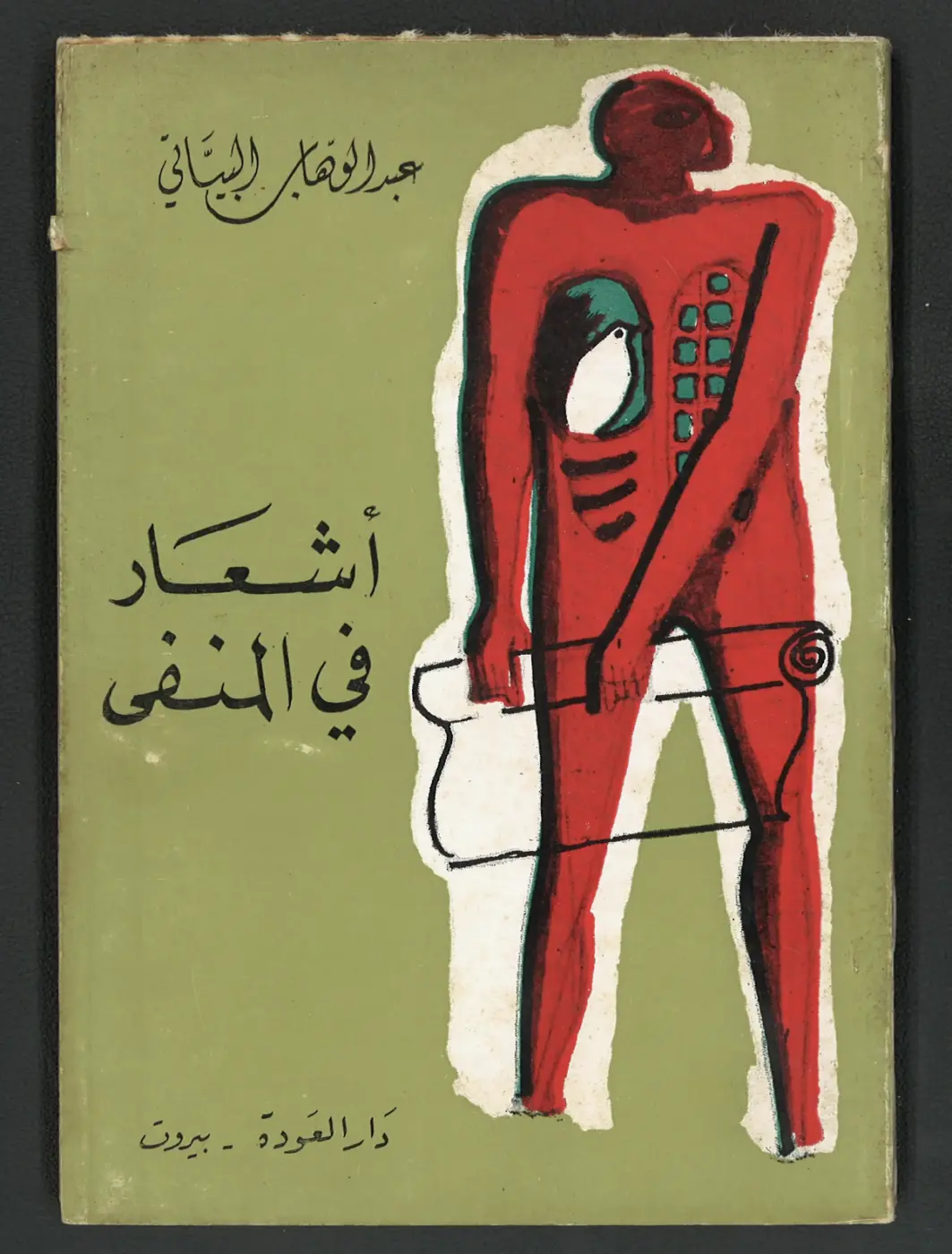
Nonetheless, in 2016, I wanted to see what could be gleaned from undertaking such work and chose to concentrate my efforts on one publishing house, Dar al-Awda (House of Return). Founded by the Palestinian journalist-turned-publisher Ahmad Said Muhammadiya (b. 1938) shortly after the Naksa (1967 Arab-Israeli war), it published works by many major figures in Arabic poetry and fiction.6 The process of re-cataloguing revealed cover designs and page illustrations by an array of well-known artists. For example, Dar al-Awda’s 1969 editions of Abd al-Wahhab al-Bayati’s Ash’ar fi al-manfa (Poems in Exile) (Fig. 3) and Tayeb Salih’s Dumat Wad Hamid (The Doum Tree of Wad Hamid) both feature cover art by the Palestinian artist Mustafa al-Hallaj (1938–2000), while page illustrations by the renowned Sudanese artist Ibrahim El Salahi (b. 1930) appear in the latter.7
More recently, Decolonizing the Page has also highlighted how artists and designers have been overlooked in legacy catalogue records. This omission is evident in the following two examples. The first, Iklil al-Shawk (Crown of Thorns) by the Palestinian Gazan poet, feminist, and political activist May Sayegh Jbejji, published in Beirut in 1969 by Dar al-Tali’a, is an early example of the use in printed matter of illustrations by Burhan Karkutli (1932–2003), whose artwork is closely associated with the Palestinian struggle (Fig. 4).8
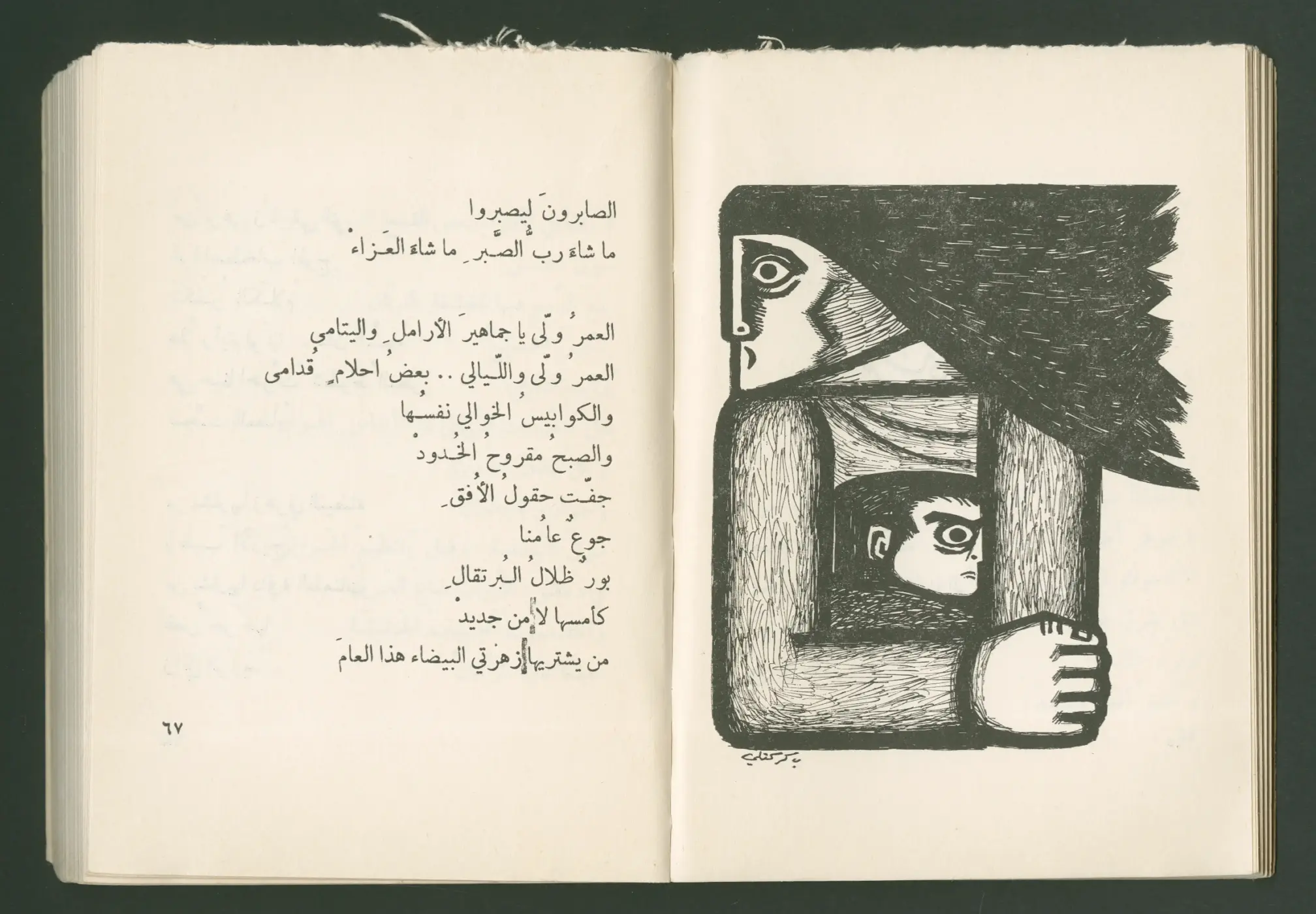
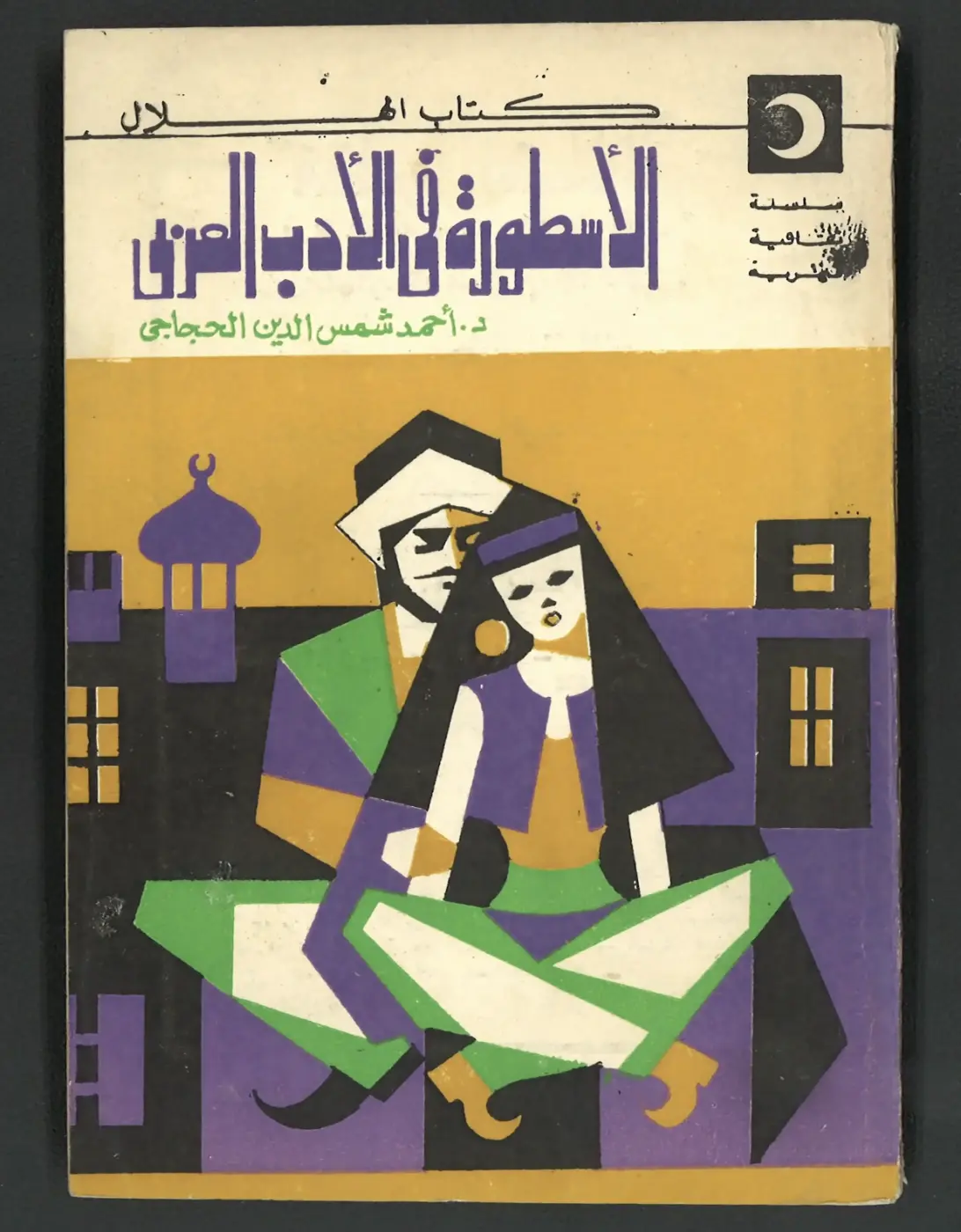
The second, al-Ustura fi al-Adab al-Arabi (Myth in Arabic Literature) by the literary critic Ahmad Shams El Din El Hajjaji and published in Cairo in 1983 by Dar al-Hilal, has a striking cover design by Samiha Hassanein (1923–2002) (Fig. 5). In both cases, attributions for the artists are found in the book: Karkutli’s signature is clearly legible, appearing alongside his illustrations, while the statement ‘الغلاف بريشة الفنانة سميحة حسنين’ (‘the cover is illustrated by—literally ‘by the brush of’—the artist Samiha Hassanein’) appears alongside the book’s publication information. Yet, neither artist was recorded in the catalogue until I used Decolonizing the Page Library to update legacy records for books held in the British Library.
Conservation practices
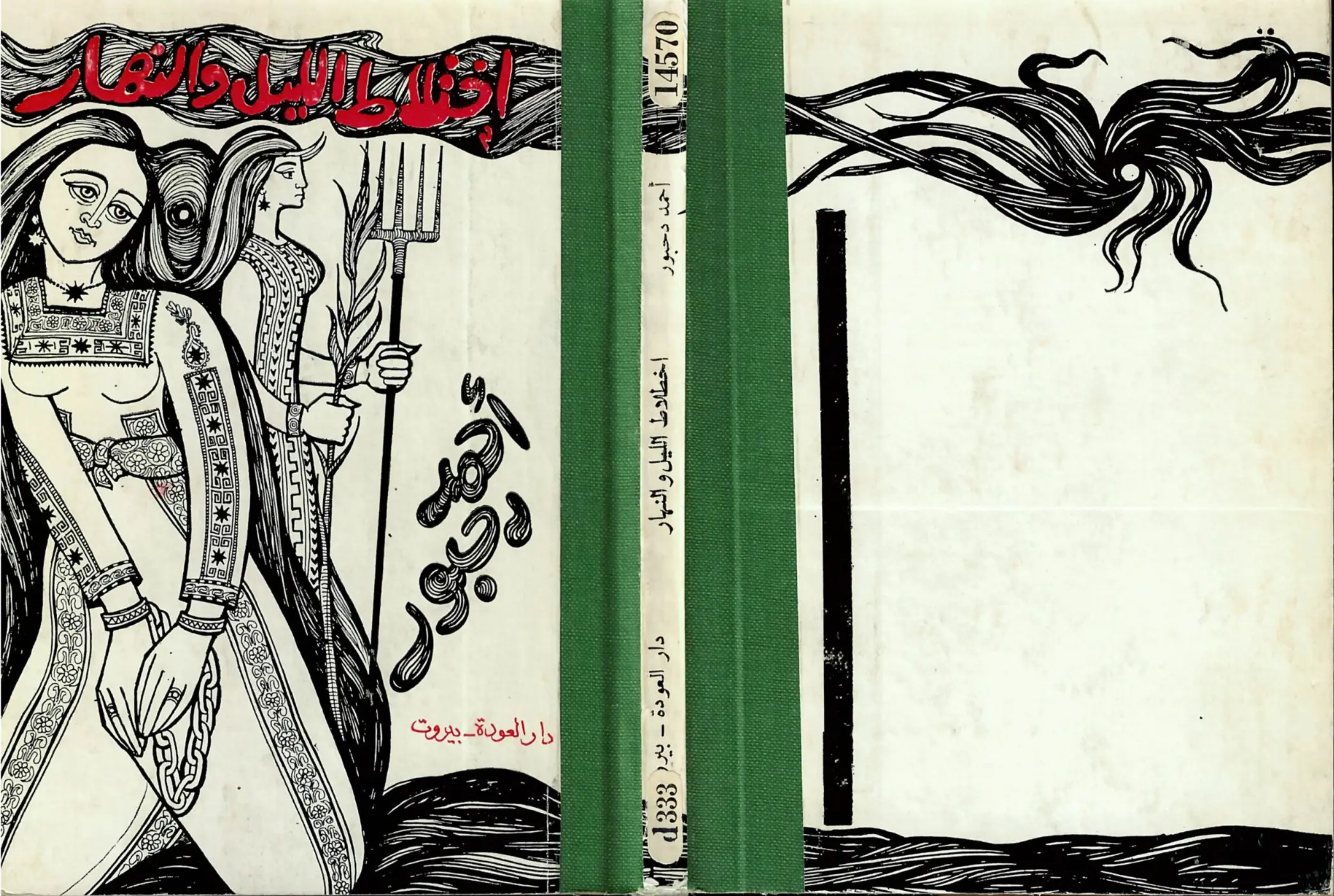
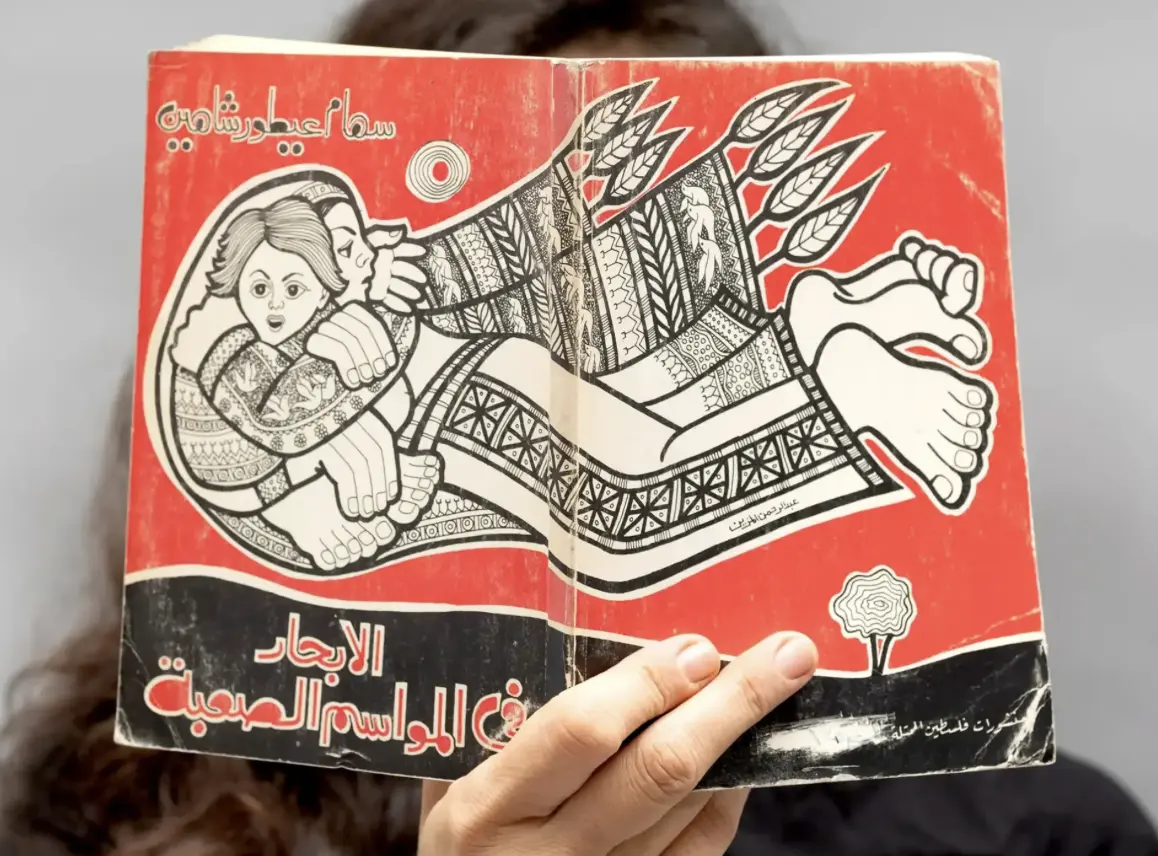
Historic conservation and preservation practices have also interfered with and obscured the contribution of artists and designers to the production of modern Arabic books. For paperback books, one practice employed by the British Museum and British Library, as well as other libraries, was to cut up the front and back covers and spine which were then pasted onto boards to create a hardcover that would protect the book block and provide it with greater durability in the long term. This method of rebinding can be seen in the British Library’s copy of Ikhtilat al-Layl wa-al-Nahar (Mixing Night and Day), a poetry collection by the Palestinian writer Ahmad Dahbour, published in Beirut in 1979 by Dar al-Awda. The cover features an illustration by the Palestinian artist Abdelrahman al-Muzayen (b. 1943) in which the locks of hair of two women depicted on the front cover flow over onto the spine and around onto the back cover.9 However, this remediation of the book interferes with the cover-to-cover wrapping design scheme—a technique also used elsewhere—and the part of the cover illustration that includes the artist’s signature was also cropped in the process (Figs 6 and 7).
Covers containing artwork were sometimes also removed and either dissociated from the book or discarded entirely, as was often the case with dust jackets. Because these detachable outer covers were prone to damage by routine handling and considered unnecessary for readers, oftentimes the British Museum and British Library, like many other institutions, did not retain them with the book itself. Practices varied in different departments and changed over time. In some cases, they were archived separately within the Library and, in 1995, over 10,000 book jackets considered to have particular artistic value were transferred to the Victoria and Albert Museum where they were housed until 2017 when they were returned to the British Library.10
Take for instance Sanawat al-Huzn (Years of Sadness), a collection of poetry by the Lebanese writer and politician Robert Ghanem, published in Beirut by Dar al-Sayyad in 1968. A copy of this book appeared in a recent auction with its original dust jacket illustrated by the Lebanese artist Rafic Charaf (1932–2003),11 yet it is absent from the British Library’s copy although the artist is credited on the half-title page (‘الغلاف بريشة رفيق شرف’).12 The dust jacket was probably removed when the book was accessioned into the British Museum on 28 August 1968 and, without any evidence to suggest otherwise, it was likely discarded. This practice was not confined to the British Museum, as evidenced by another copy of the same book in the Bodleian Library that also lacks the illustrated dust jacket.13
Collection building
Beyond cataloguing and preservation practices, curatorial approaches to collection building have also shaped what kinds of books entered institutional collections. As is the case with many Western libraries, the development of the British Library’s Arabic collection is historically rooted in and informed by Orientalist scholarship, which prioritized collecting classical and religious literature for their textual content and philological value. There was not a systematic approach to collecting modern or experimental literature, which often featured artist-designed covers and illustrations, and many important books were frequently overlooked or treated as secondary compared to more traditional forms of literature and Islamic art. Moreover, the modern Arabic book was rarely, if at all, considered a significant art or design object in its own right. Acquisitions policies also actively excluded certain genres and formats altogether, such as children’s books and artists’ books, since they were considered ‘out of scope’ and lacking ‘research value’ even when they were produced by well-known authors, artists, and designers.
Over the past decade, I have adopted a broader and more inclusive curatorial approach to collecting that seeks to go some way towards redressing this imbalance. Initially driven by an interest in collecting Arabic comics and graphic novels,14 this approach soon broadened to encompass other formats, including zines, photobooks, artists’ books, artist- and designer-led publications, posters, and other forms of print ephemera, all of which had previously fallen outside the scope of the British Library’s collecting. This has been achieved both by collecting works being produced today and, crucially, by identifying and seeking to acquire significant publications that were overlooked in the past.
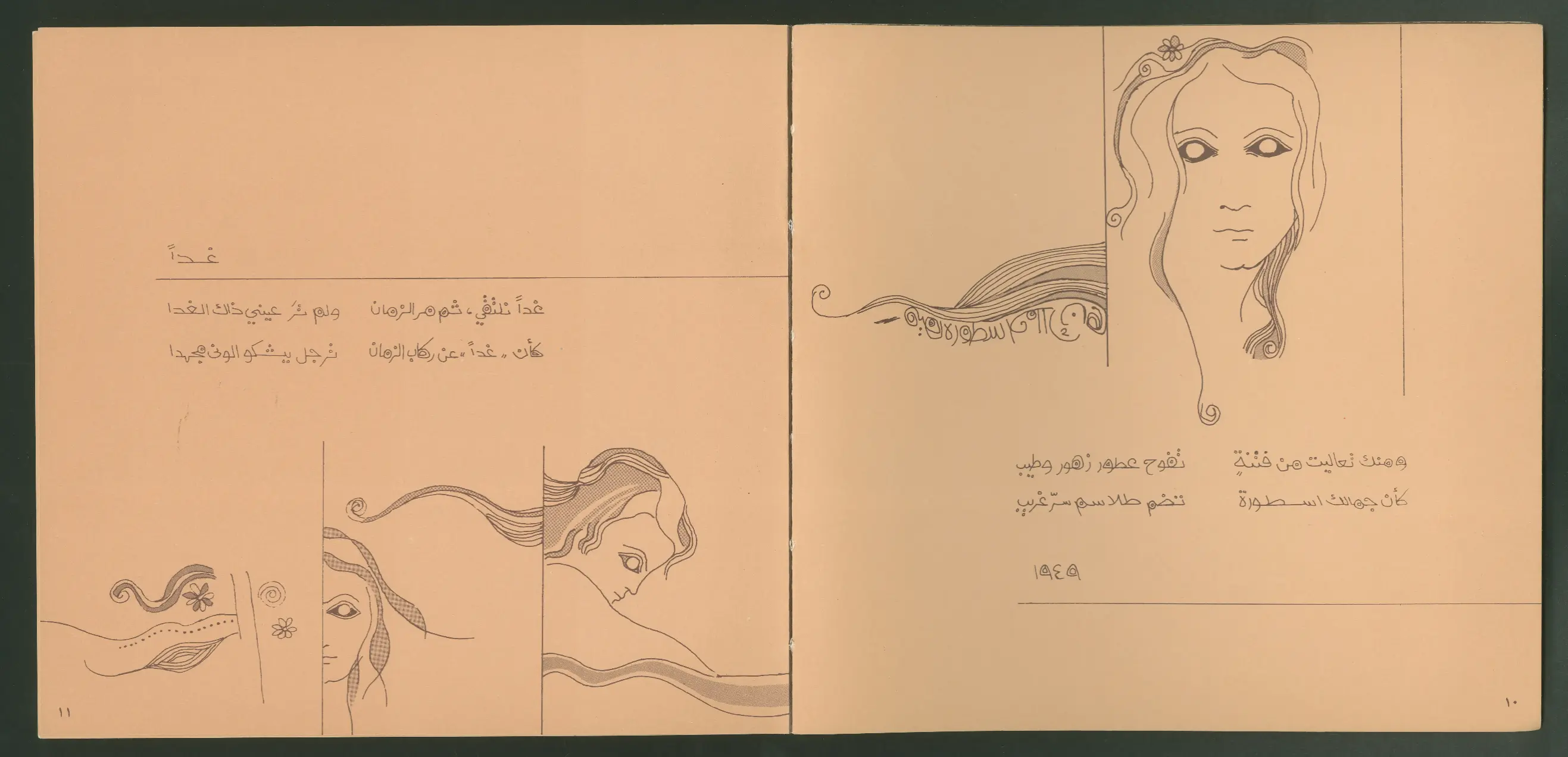
Two such examples are books illustrated by Dia al-Azzawi (b. 1939), one of the most important living Arab artists, who relocated from Baghdad to London in 1976.15 The Body’s Anthem memorializes the 1976 Tel al-Zaatar massacre with poetry by Mahmoud Darwish, Tahar Ben Jelloun, and Youssef al-Sayigh and was illustrated with artwork by Azzawi. Although published by Dar al-Muthallath in Beirut in 1980, it was not purchased by the British Library until 2016 (British Library, ORB.40/1081 / Decolonizing the Page Ref. A826).16 Shafiq al-Kamali’s collection of poetry Rahil al-Amtar (The End of the Rains), also designed and illustrated by Azzawi and printed by Nadhim Ramzi (1928–2013) in Baghdad in 1971 (Fig. 8), was donated by the artist from his own collection in 2021.
A recent project supported by Art Fund’s New Collecting Award focused on further developing the British Library’s Arabic books that reflect visual culture. Running between 2022 and 2024, it resulted in the purchase of over 450 items produced from the 1950s to the present day.17 Notably, the project contributed to building a collection of groundbreaking children’s books, including those published in Beirut and Cairo in the 1970s and 1980s by the radical Palestinian children’s publisher Dar al-Fata al-Arabi and al-Warshah al-Tajribiya al-Arabiya li-Kutub al-Atfal (Arab Experimental Workshop for Children’s Books) headed by Mohieddine Ellabbad (1940–2010).18
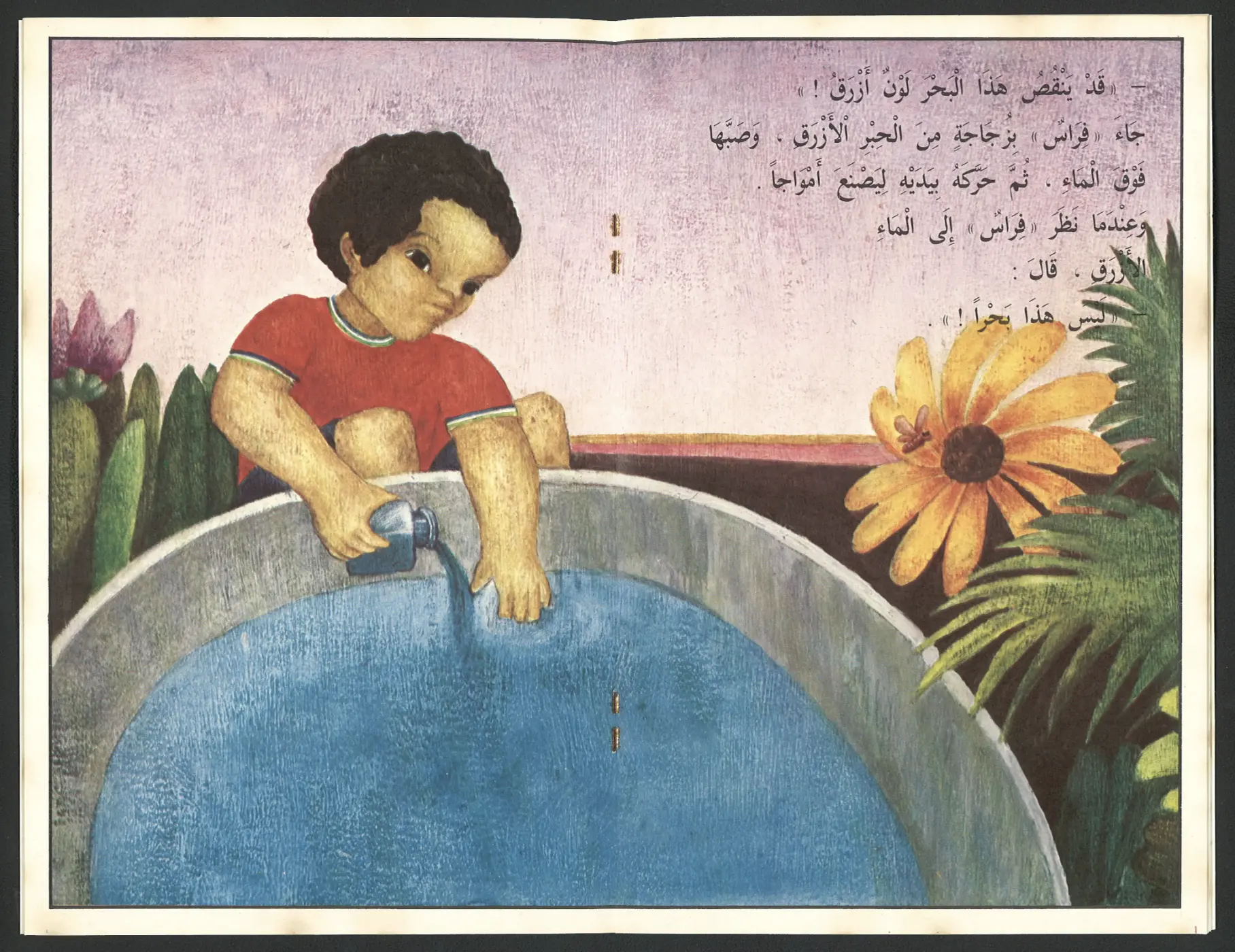
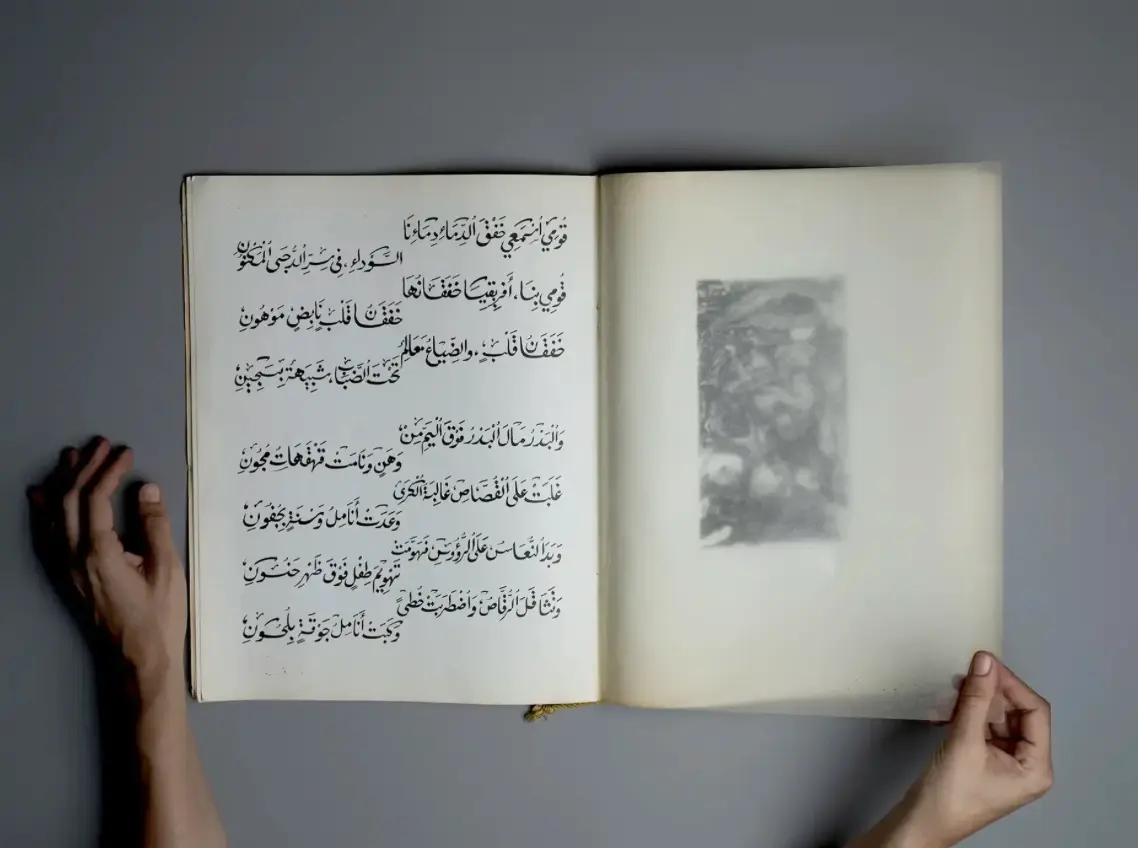
Most recently, Decolonizing the Page has proven to be a useful reference point for identifying gaps in the collection and possible new acquisitions, as exemplified by two recently purchased books that deploy an interplay between text, poetry, art, and design. Poèmes is an Arabic translation by Nemer Sabah of poems by the Senegalese politician, cultural theorist, and poet Léopold Sédar Senghor. Illustrated by Robert Frégiers and with Arabic calligraphy by Ahmed Baba, the book was printed by the Grande Imprimerie Africaine for the Lebanese Committee of Dakar’s participation in the first World Festival of Black Arts held in Dakar in 1966 and was acquired by the British Library in 2025 (Fig. 10). Another example is Kafr Qasim: al-majzara, al-siyasiya (Kafr Qasim: the massacre, the politics), published in Beirut by Manshurat Filastin al-Thawra in 1977; it was acquired in 2026 (British Library, ORB.30/9695 / Decolonizing the Page Ref. A524). A collaborative publication by the Palestinian writer and politician Emile Habibi and the poet Samih al-Qasim with cover art and illustrations by Abed Abdi (b. 1942),19 it was originally published in Akka in 1976 by Manshurat Arabisk to commemorate twenty years since the massacre of 49 Palestinian citizens of Israel by the Israel Border Police on 29 October 1956.
The examples discussed here demonstrate that the visibility of the roles of artists, designers, calligraphers, and printers in the production of the modern Arabic book has been shaped to some extent by the institutional practices of libraries in which they are kept. Decisions made over decades—whether to omit an illustrator’s name from a catalogue record, remove a dust jacket during conservation, or prioritize certain genres and formats for acquisition—have impacted on what can be retrieved, studied, exhibited, and appreciated. By foregrounding modern Arabic book art and design, Decolonizing the Page offers an invitation to librarians and curators to reconsider institutional collections in a new light. By enhancing catalogue records, reassessing conservation practices and actively addressing imbalances and gaps in collections, libraries can help restore visibility to artists and designers whose contributions to the modern Arabic book have been obscured and marginalized. In doing so, collections have the potential to be re-activated in new and generative ways which ultimately go some way to broadening, diversifying, and decolonizing the history of the art of the book more generally.
Daniel Lowe is Curator of Arabic Collections at the British Library, where he works across manuscript and printed heritage with a particular focus on modern and contemporary visual culture. In 2021, he convened the Histories and Archives of Arabic Publishing series with Hana Sleiman. He was the recipient of Art Fund’s New Collecting Award in 2022. His curatorial projects include Comics & Cartoon Art from the Arab World (2017), Passports and Identity Documents in the Hands of Artists (2024–25), and Fighting to Be Heard at Cartwright Hall Art Gallery, presented as part of Bradford 2025 UK City of Culture.
- Comprising approximately 120,000 volumes, the collection incorporates the holdings of the British Museum Library and the India Office Library. For an overview of the Arabic collection, see Hugh Goodacre, Ursula Sims-Williams, and Penelope Tuson, Arabic Language Collections in the British Library (London: British Library, 1984). For broader institutional histories, see P. R. Harris, A History of the British Museum Library, 1753–1973 (London: British Library, 1998), and A. J. Arberry, The India Office Library: A Historical Sketch (London: Commonwealth Office, 1967). ↩︎
- Records appear on the British Library’s own catalogue, https://catalogue.bl.uk/, and are shared through national and global union catalogues, such as Jisc’s Library Hub Discover, https://discover.libraryhub.jisc.ac.uk/, and OCLC’s WorldCat, https://search.worldcat.org/. ↩︎
- For codicology of Arabic and Islamic manuscripts, see François Déroche, Islamic Codicology: An Introduction to the Study of Manuscripts in Arabic Script (London: Al-Furqan Islamic Heritage Foundation, 2015), and Adam Gacek, Arabic Manuscripts: A Vademecum for Readers(Leiden: Brill, 2009). For rare printed books cataloguing, see DCRMR: Descriptive Cataloging of Rare Materials (RDA Edition), https://bsc.rbms.info/DCRMR/, accessed July 1, 2026. ↩︎
- On card catalogues, see Markus Krajewski, Paper Machines: About Cards & Catalogs, 1548–1929 (Cambridge, MA, and London: MIT Press, 2011), and The Card Catalog: Books, Cards, and Literary Treasures (San Francisco: Chronicle Books, 2017). ↩︎
- For example, Martin Lings and Yasin Hamid Safadi, Third Supplementary Catalogue of Arabic Printed Books in the British Library, 1958–1969 (London: British Library, 1977). ↩︎
- For Muhammadiya’s memoir, see Hayati bayna al-shi’r wa-al-shu’ara (Beirut: Dar al-Awda, 2014). ↩︎
- On Mustafa al-Hallaj, see Alessandra Amin, ‘Mustafa El Hallaj, Palestine, 1938–2000’, Dalloul Art Foundation, Beirut, dafbeirut.org accessed July 2, 2026. On Ibrahim El-Salahi, see Salah M. Hasan, ed., Ibrahim El-Salahi: A Visionary Modernist (London: Tate, 2013). ↩︎
- On Karkutli, see Grafik der Revolution: Burhan Karkutli, ein palästinensischer Künstler (Frankfurt: R.G. Fischer, 1981), and Ghazi al-Khalidi, Burhan Karkutli: Fannan al-Ghurbah wa-al-Hirman (Damascus: Wizarat al-Thaqafah, 2004). ↩︎
- On al-Muzayen, see Wafa Roz, ‘Abdelrahman Al Muzayen, Palestine, 1943’, Dalloul Art Foundation, Beirut, dafbeirut.org accessed July 1, 2026. ↩︎
- I am grateful to my colleagues Alison Bailey and Felicity Myrone at the British Library for providing information on the handling of dust jackets in the British Museum and British Library. For discussions of dust jackets more broadly and in the context of the British Library, see G. Thomas Tanselle, Book-Jackets: Their History, Forms, and Use (Charlottesville: Bibliographical Society of the University of Virginia, 2011); John Clute, The Book Blinders: Annals of Vandalism at the British Library, a Necrology (St Kilda, Australia: Norstrilia Press, 2024); and G. Thomas Tanselle, ‘Book-Jackets and the British Library’, The Book Collector 73, no. 3 (Autumn 2024): 416–25. ↩︎
- Lot 24. Auction listing, Artscoops, artscoops.com accessed April 28, 2026. ↩︎
- British Library, 14573.bb.129. On Charaf, see Wafa Roz, ‘Rafic Charaf, Lebanon, 1932–2003’, Dalloul Art Foundation, Beirut, dafbeirut.org accessed July 1, 2026. ↩︎
- Bodleian Library, University of Oxford, PC G33.1, solo.bodleian.ox.ac.uk accessed July 1, 2026. This copy was formerly part of the Middle East Centre Library collection at St Antony's College and later transferred to the Bodleian. I am grateful to Lydia Wright at the Bodleian Library for confirming this. ↩︎
- In 2017, I curated the exhibition Comics & Cartoon Art from the Arab World at the British Library as part of the Shubbak Festival. See ‘Comics and Cartoon Art in the Arab World’, Shubbak, shubbak.co.uk accessed July 1, 2026. ↩︎
- On Azzawi, see Dia Al-Azzawi: A Retrospective from 1963 until Tomorrow (Doha: Mathaf: Arab Museum of Modern Art; Milan: Silvana Editoriale, 2017) and Louisa Macmillan, ed., A Picture of Poetry : the Artist's Books of Dia Al-Azzawi (Milan: Skira, 2023). ↩︎
- On this book, see Saleem al-Bahloly, ‘The Persistence of the Image: Dhākira Hurra in Dia Azzawi’s Drawings on the Massacre of Tel al-Zaatar’, ArtMargins 2, no. 2 (2013), 71-97; and Zeina Maasri, Cosmopolitan Radicalism: The Visual Politics of Beirut's Global Sixties (Cambridge: Cambridge University Press, 2020), 205-7. ↩︎
- See Daniel Lowe, ‘Art Fund New Collecting Award: Collecting Arab Visual Cultures (1960 to Today)’, Asian and African Studies (blog), British Library, June 24, 2024, https://bl.iro.bl.uk/concern/generic_works/004850ab-e724-4b38-b923-a16dfa04d551?locale=it, accessed July 1, 2026. ↩︎
- See, Khan, Mohieddin Ellabbad and Nawal Traboulsi ‘Revolution For Kids Dar El Fata El Arabi, Recollected Hassan Khan, Mohieddin Ellabbad, Nawal Traboulsi’, Bidoun, 19 (2010) https://www.bidoun.org/articles/revolution-for-kids, accessed 1 July, 2026; Maasri, Cosmopolitan Radicalism, chap. 6, and ‘Book Arts as Archives of Decolonization: The Design and Visuality of Arabic Books (1950s–1980s)’, Journal of Design History 39, no. 1 (2026), 83-4. ↩︎
- On Abedi, see Abed Abdi: 50 Years of Creativity (Um el-Fahem: Umm el-Fahem Art Gallery, 2010). ↩︎