From page to screen: the afterlives of ‘In time of war children testify’ (1970)
Anaïs Farine
13.07.2026
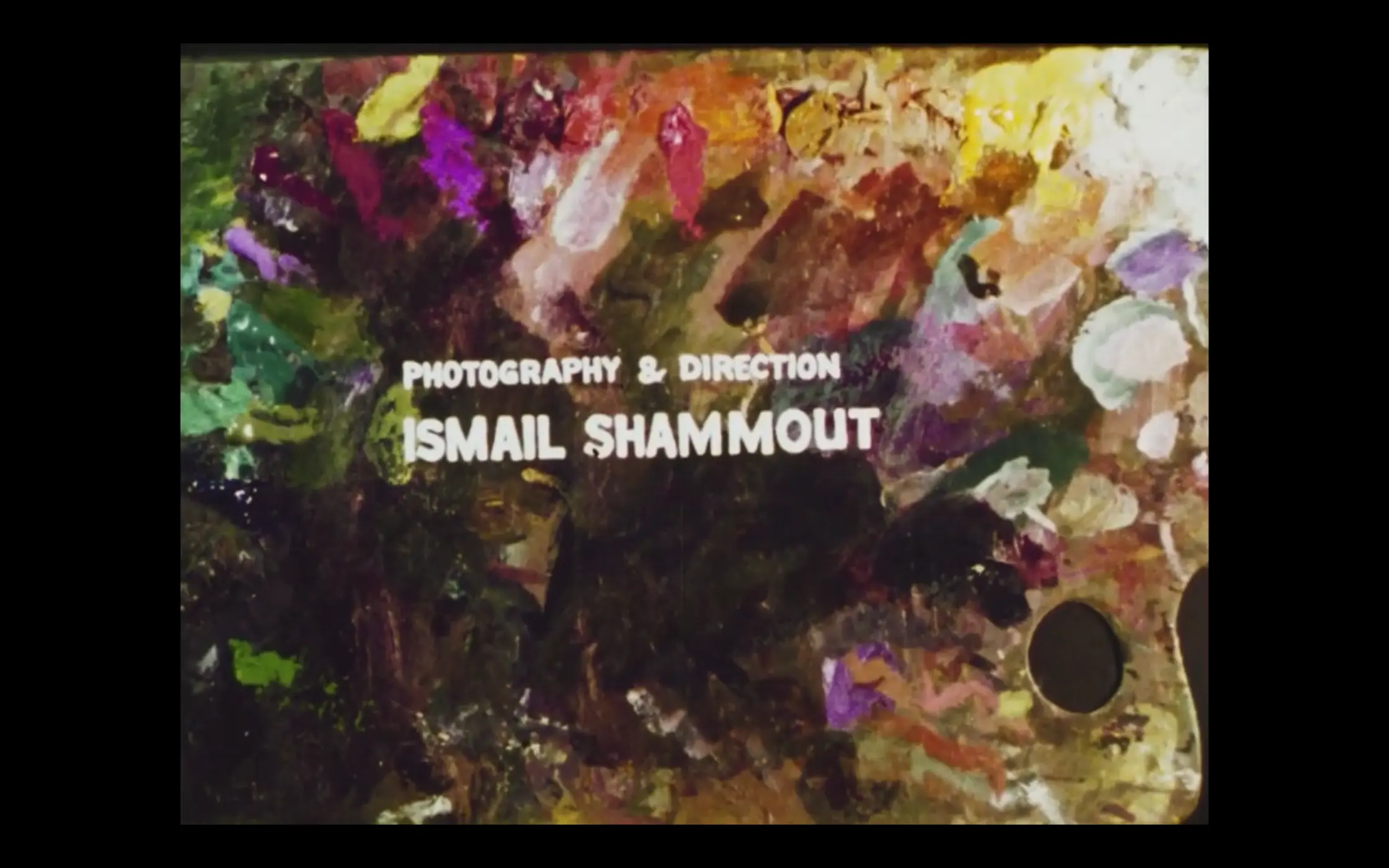
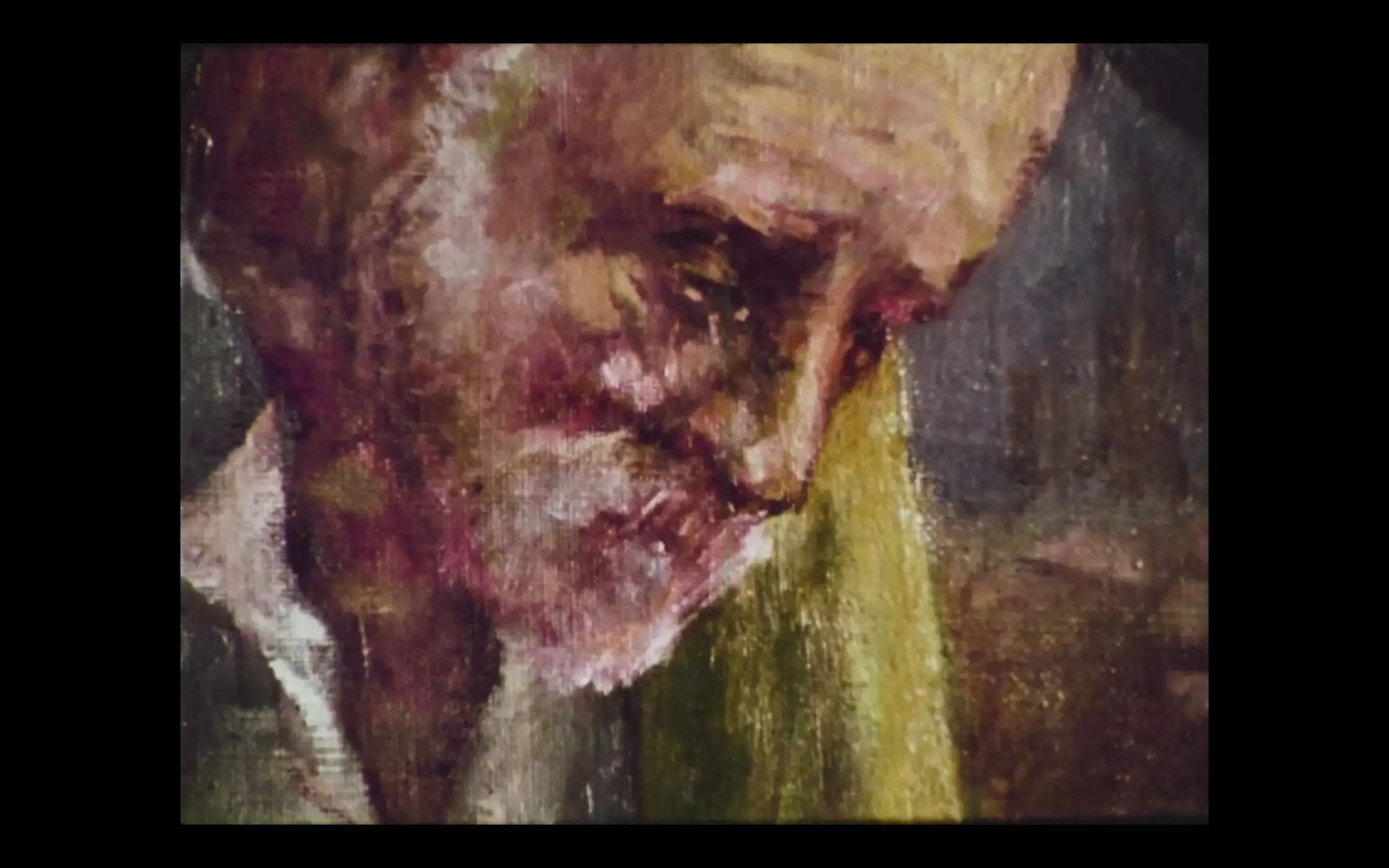
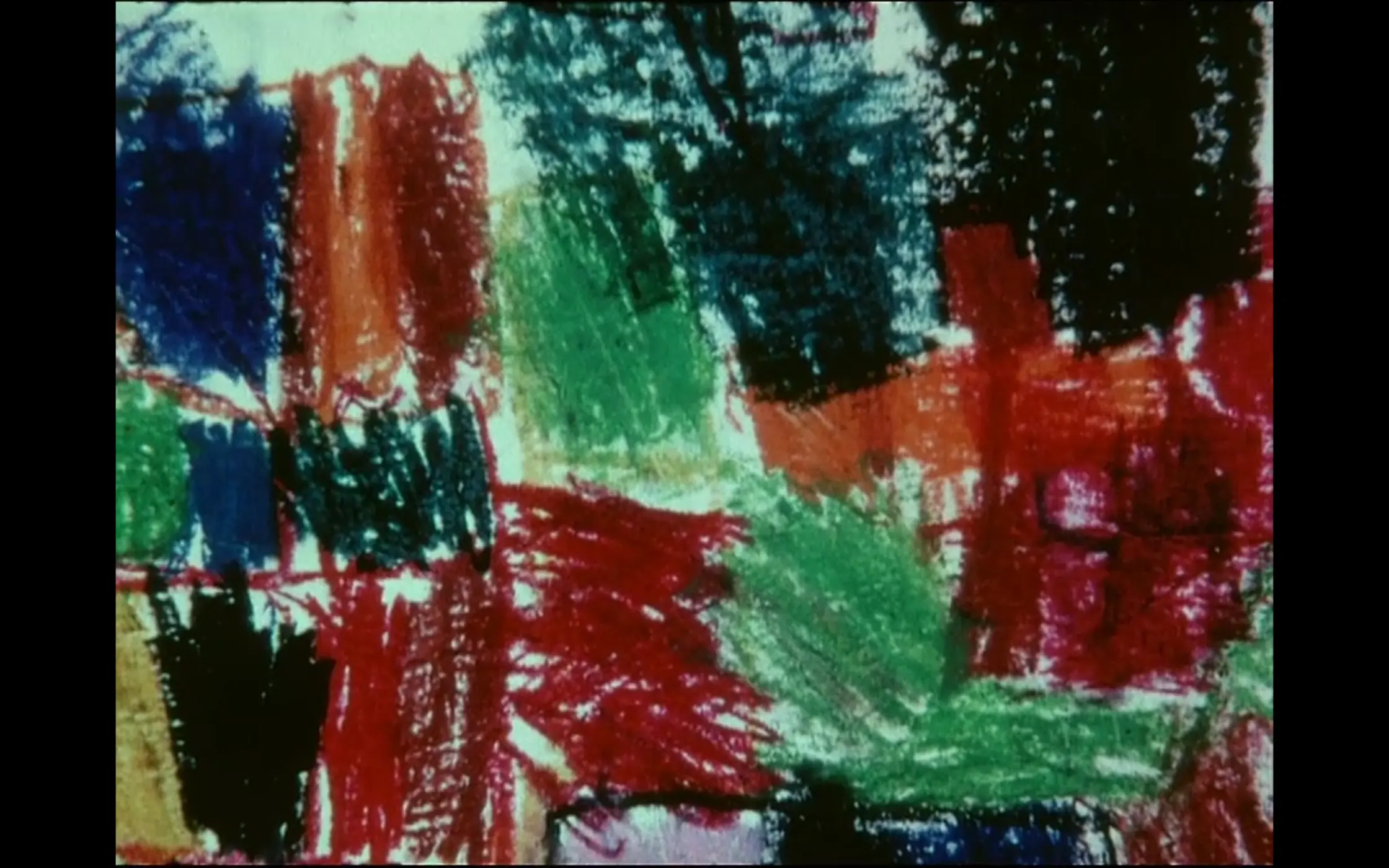
It is rare to see an established artist turn to filmmaking to animate their own paintings. This has been the path of Palestinian artist Ismail Shammout (1930–2006). In his film Glow of Memories (ذكريات ونار، 1973), produced by the Cultural Arts Section of the Palestine Liberation Organization (PLO), Shammout’s oil paintings are rendered into film to narrate the history of Palestine and the expulsion of its people (fig. 1). Explaining his shift to the audiovisual in the Lebanese Communist Party periodical al-Akhbar, Shammout notes that cinema has a deeper impact on audiences than the ‘Fine Arts’ and better enables him to communicate the meaning of the artwork.1 The deeper impact attributed to film by Shammout in Al-Akhbar echoes with André Malraux’s thesis on the imaginary museum, as well as with Walter Benjamin’s argument in ‘The Work of Art in the Age of Mechanical Reproduction’. For both intellectuals, photography and film allow a far greater audience to engage with artworks beyond the elite circles of museumgoers. The intermediality of the Arab Alternative Cinema movement was nevertheless not solely aimed at democratizing art; rather, it was deployed to increase the resonance of Palestinian experiences and struggles.

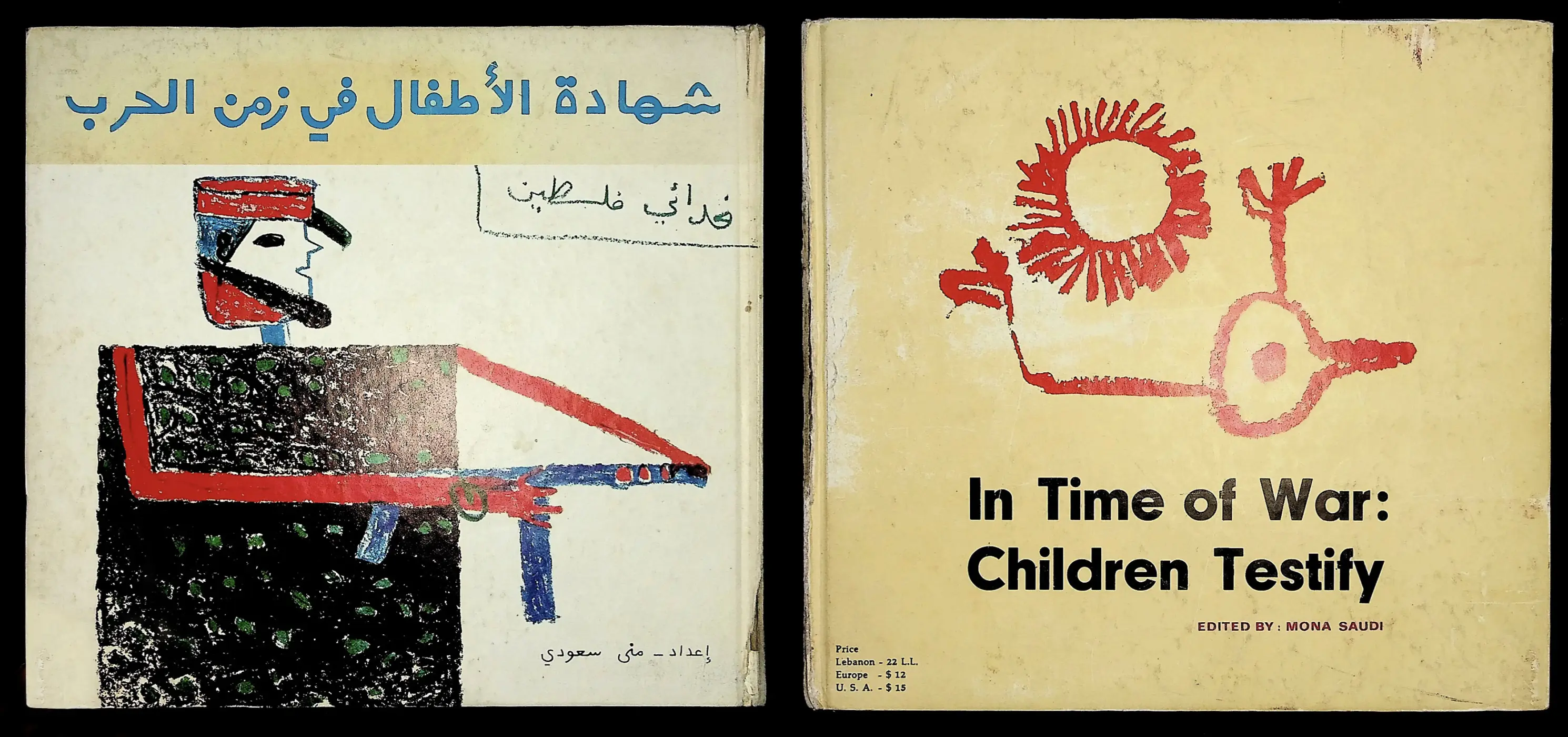
If books, as observed by Zeina Maasri, ‘brought modern Arab art out of galleries and into everyday life’2, the ‘remediation’ of painting and drawing into film, and the various collaborations between Arab filmmakers and artists, played a similar role in the 1970s. According to Jay David Bolter and Richard Grusin, remediation is ‘the representation of one medium in another’3. While they argue that it is a defining characteristic of new digital media, I use the term here to refer to the remediation of paintings, photographs, and drawings into film, and argue that it was a defining characteristic of modern militant cinema. In this essay, I focus on various cases of the remediation of In Time of War Children Testify (1970), a book edited by the Jordanian artist Mona Saudi and published by the Beirut-based cultural journal Mawaqif, in collaboration with the Popular Front for the Liberation of Palestine (PFLP) (fig. 2). It is exhibited in the ‘Children’s Testimony’ section of Room 2, ‘Bearing Witness’, in Decolonizing the Page (Ref. MK001). The book is composed of drawings collected by Saudi following workshops that she conducted with Palestinian children in the Baqa’a refugee camp in Jordan, who were forcibly displaced as a consequence of the 1967 war. The idea for this book emerged during Saudi’s participation in the May 1968 student uprising in France and from her subsequent desire to engage in the Palestinian resistance and Arab New Left movements.4 In this essay, I examine how the remediation of Palestinian Children’s testimonies from book to film enabled their circulation across media and contexts, allowing voices silenced by bombardment to be reactivated in ‘other spaces of reception’5.
When it was published, In Time of War Children Testify generated exceptional interest. The attention to children and their imaginative world explored in the book paved the way for the creation of Dar al-Fata al-Arabi, a radical publishing house for children.6 At the time, around 2,000 copies were sent to Maspero, a militant publisher whose bookshop (La Joie de lire) served as a crucial site for circulating Third Worldist and anticolonial perspectives within the French radical Left. In Paris, all of the copies were sold within two months.7
The enthusiasm that Mona Saudi’s book sparked among filmmakers around the world constitutes another remarkable aspect of its circulation and reception. An adaptation was made by the Lebanese filmmaker Bahij Hojeij in his film Twenty-four (Vingt‑Quatre, 1973). Hojeij worked on the film while studying cinema in Paris, where he developed it as the subject of his diploma thesis, The Palestinian Conflict Through Children’s Drawings (Film & Text). Unfortunately, the 16 mm copy of Hojeij’s film was lost when his apartment in Lebanon was bombed in 1990.8 Traces of the film nevertheless still exist, thanks to another diploma thesis written a few years later by Daniel Arroyo-Bishop, who participated in the making of Twenty-four. It reveals, in particular, that the film systematically combined modern Arabic poetry with drawings from Testimony of Palestinian Children in Wartime. Eight copies of Twenty-four were printed in Paris, and the film was widely circulated in France by the PLO and the Librairie Palestine bookshop.9
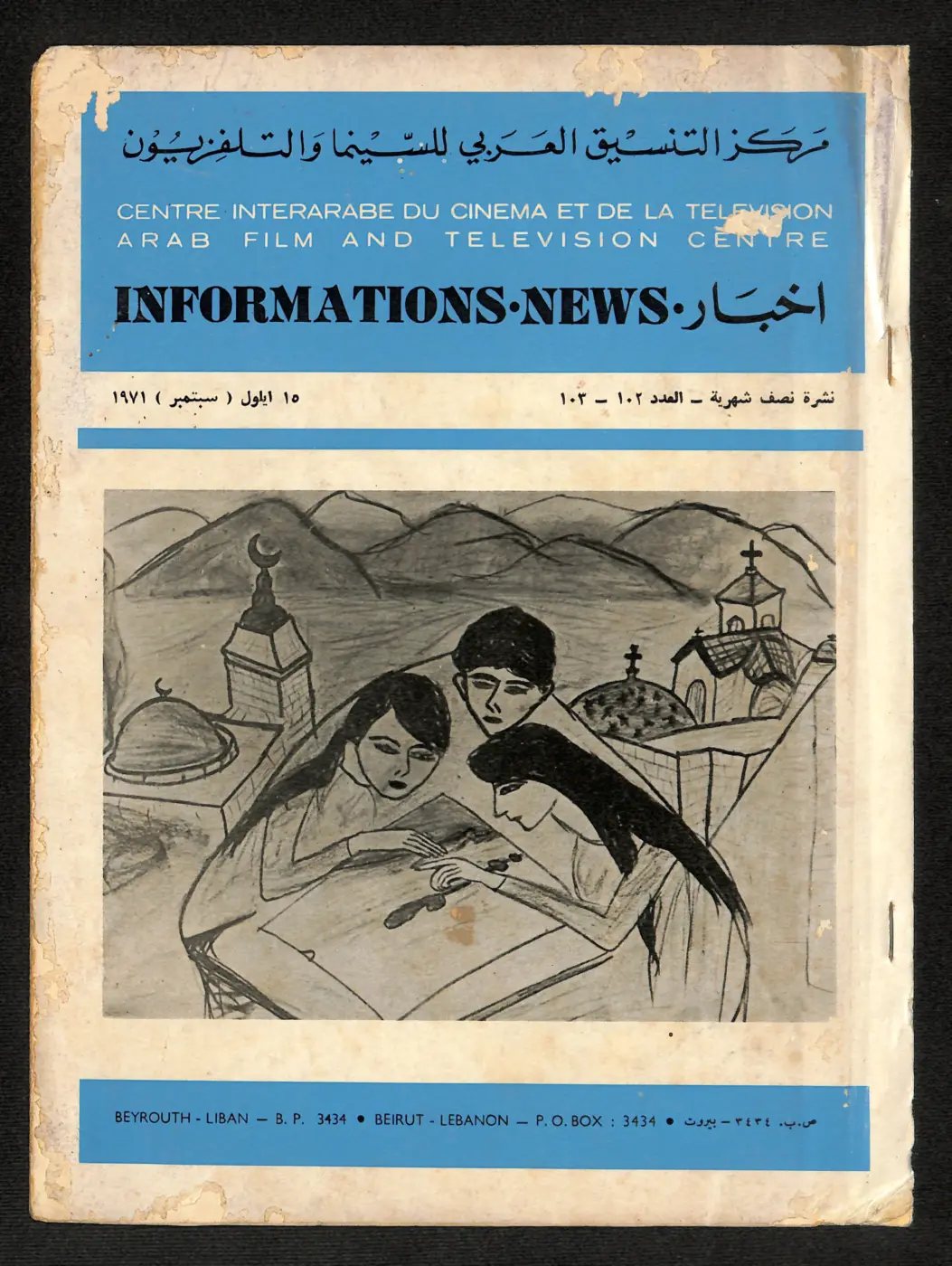
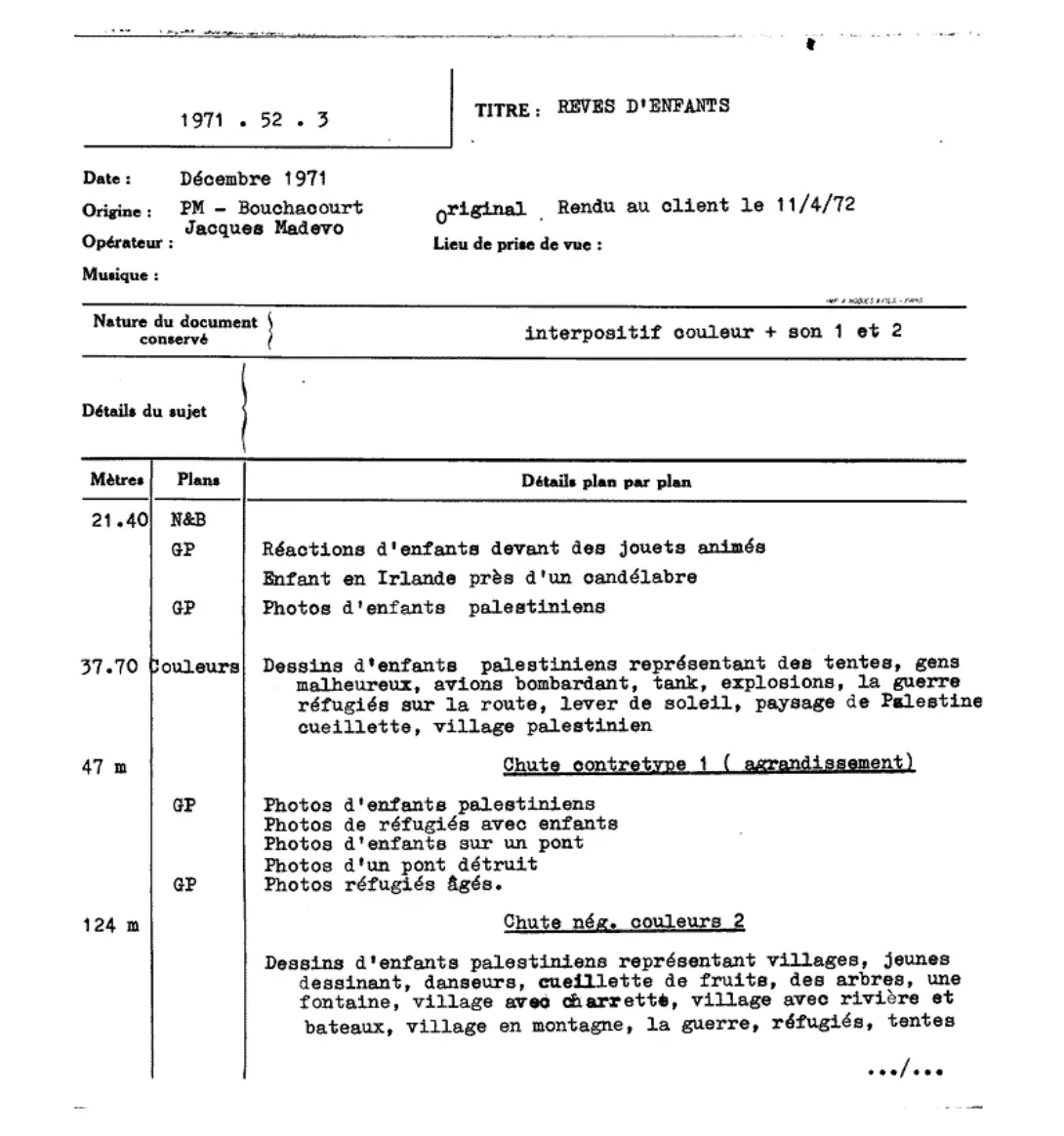
As with other films lost following the looting and destruction of Palestinian archives during the Israeli occupation of Beirut in 1982, a copy of Twenty-four may yet resurface in the archive of an organization that collaborated with the PLO in France at the time.10 This was the case with Blown by the Wind (مبعثرون في الهواء), another film inspired by In Time of War Children Testify. Made in Lebanon by the Lebanese-Armenian filmmaker Jacques Madvo in 1971, the film was later located in Tokyo among a group of twenty 16 mm film reels collected by a Japanese Palestine solidarity organization. Madvo’s film has since been digitized and recirculated by the contemporary cinema collective Subversive Film. Like Saudi’s book, Blown by the Wind was positively received. It achieved recognition in Japan and was also acquired by Pathé Journal, which released a shortened, re-edited version titled Dreams of Children (Rêves d’enfants) in French cinemas during Christmas 1971. Another film that features drawings from In Time of War Children Testify is I Can Never Forget Palestine (I kan Palestina niet vergeten) by Trudy van Keulen, produced by the Dutch public broadcaster IKOR and screened twice on television in 1971.11
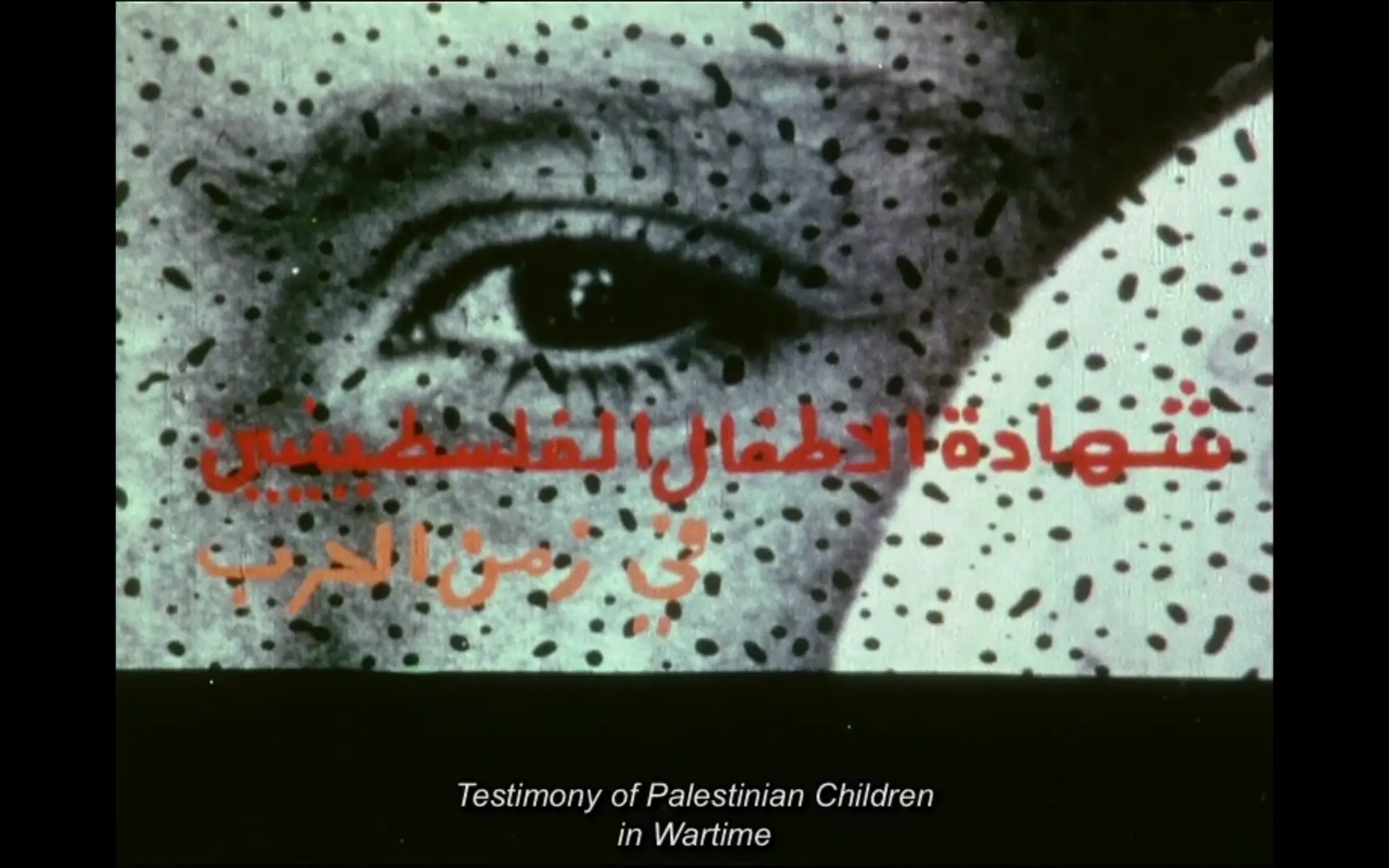
Testimony of Palestinian Children in Wartime (شهادة الأطفال الفلسطينيين في زمن الحرب)12 is yet another adaptation, conceived by Kais al-Zubaidi and released in 1972. Zubaidi was a filmmaker from Iraq working in Syria at the time. He contributed to the development of the Arab Alternative Cinema movement, which sought to challenge mainstream film productions and forge new narratives in the wake of the Arab military defeat in the 1967 war with Israel. Like Palestinian revolutionary films and Third Cinema,13 Arab Alternative Cinema was both militant and experimental. It often drew on still images (archival photographs, newspaper headlines, and posters) and combined different media to articulate political arguments. On multiple occasions, Kais al-Zubaidi himself interwove poetry, painting and film footage in his own films: Ausflug (1966), The Visit (الزيارة، 1970), and More Colors (زائد ألوان، 1972). He notably collaborated with Syrian artist Nazir Nabaa in 1970, whose book illustrations for various publishers can be searched in Decolonising the Page’s digital library. The emergence of Arab Alternative Cinema at the beginning of the 1970s laid the ground for experimental filmmaking that could be based entirely on a book composed of drawings.
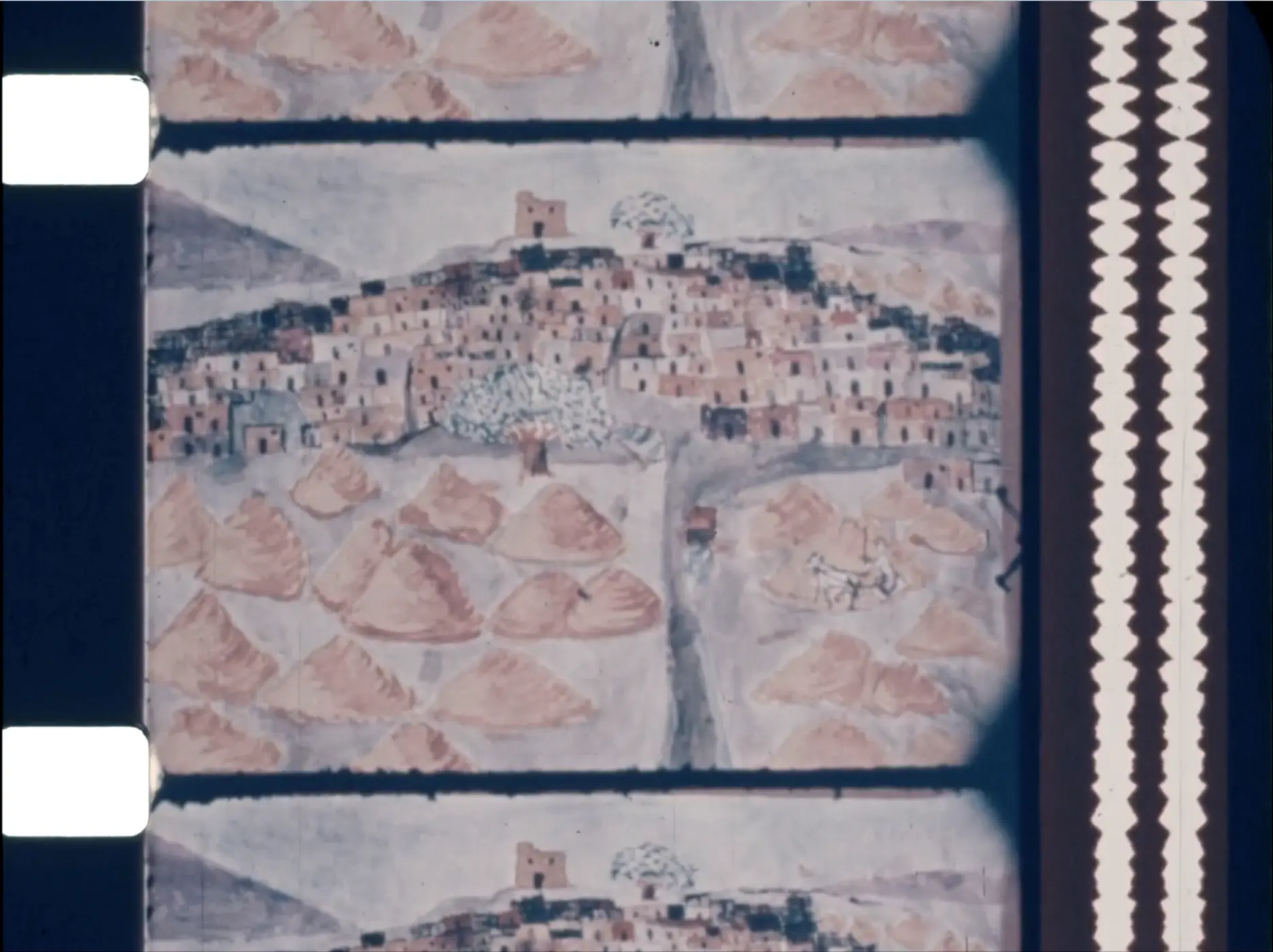
A comparison of how Jacques Madvo and Kais al-Zubaidi remediate children’s drawings cinematically is illuminating. Like Shammout, both Madvo and al-Zubaidi mobilize music and sounds—such as the wind and the warning siren, for example—to add connotative meaning to the still images.
Their choices regarding voice-over, however, as well as the drawings selected for their films, differ significantly. In Testimony of Palestinian Children in Wartime al-Zubaidi allows more space for abstract drawings than is the case in Blown by the Wind. This difference is closely linked to the role attributed to children in the narration process. In contrast to the male voice-over that dominates Madvo’s film and articulates a liberal discourse of peace in English—a reminiscence of UNRWA (United Nations Relief and Works Agency for Palestine Refugees in the Near East) practices,14 for which Madvo worked in Palestine and Lebanon in the 1950s and 1960s—the opening commentary in al-Zubaidi’s film is spoken by a child. The child explains how to read the remediated images: ‘Red means revolution. Green means our fertile land. Yellow means the desert, and the Palestinian people were driven out from their cities and villages’. By elucidating the codification of the image for the audience, the child participates on an equal plane with the filmmaker in narrating the Palestinian experience. This filmmaking choice recalls al-Zubaidi’s earlier work with children. In Far from the Homeland (1969 ،بعيداً عن الوطن), the voice-over is composed exclusively of children’s words from the Sbeineh refugee camp in Syria, who humorously describe the images of their own daily lives as they appear on screen.15
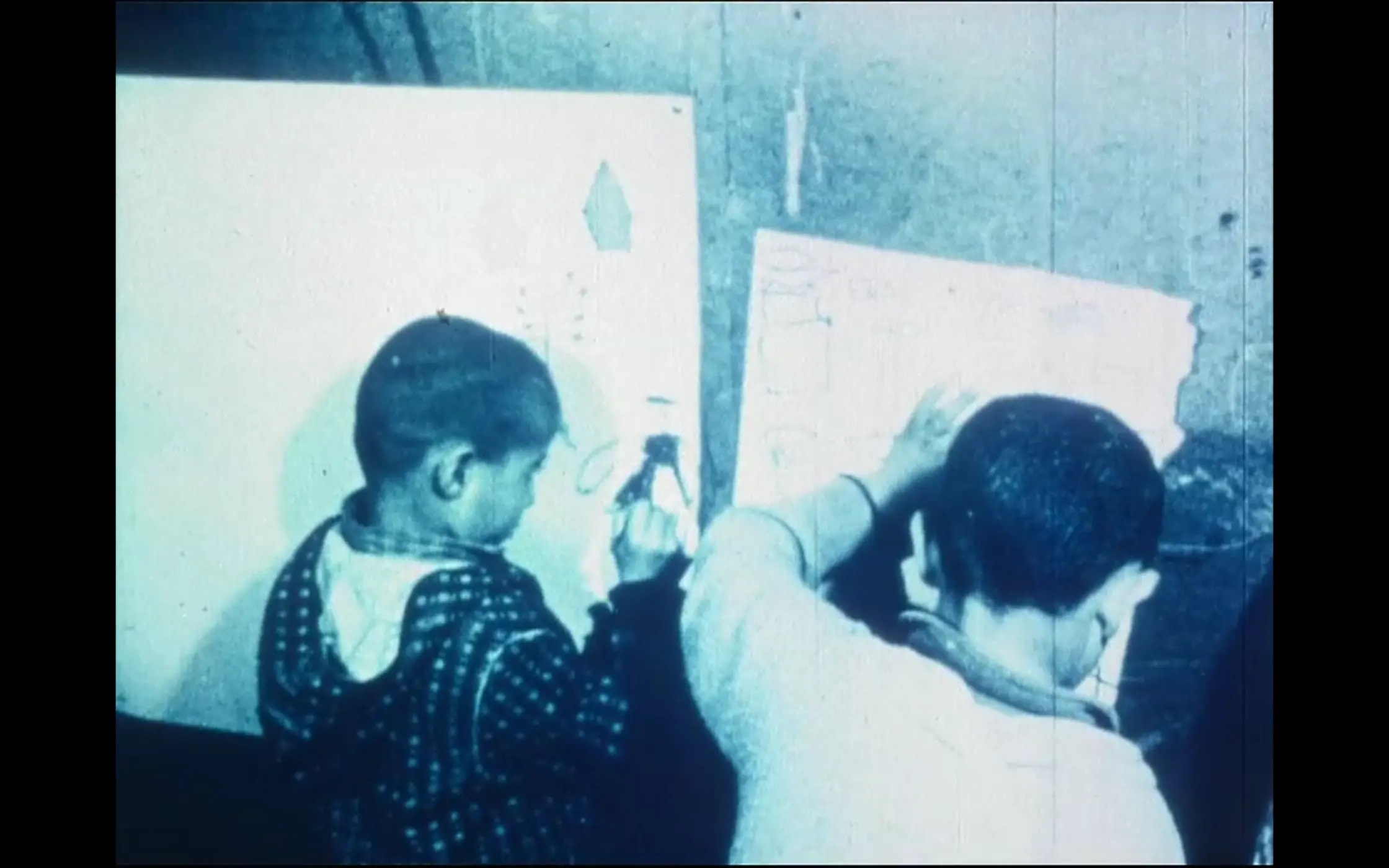
Besides children’s drawings, another source material featured in Kais al-Zubaidi’s film is documentary footage shot in 1968 by Hany Jawhariyyeh, the co-founder of the Palestine Film Unit, who was killed while filming in Lebanon in 1976. Through the images provided by the Palestinian Cinema Institute, al-Zubaidi’s film attests to collaboration across different media from the very beginning of Saudi’s work in the refugee camp. Together with the Palestinian artist Vladimir Tamari, Jawhariyyeh had initially planned to create a film using drawings and footage produced during Saudi’s workshops, but the project fell apart as a result of the violent events of Black September and Tamari’s departure for Japan.16 The fate of many of the children featured in In Time of War Children Testify remained unknown after the destruction of the refugee camp during the armed conflict between the Jordanian army and the PLO in 1970. Many of them were killed.17 In an interview, Kais al-Zubaidi explained:
‘I met Mona Saudi in Beirut and saw her amazing book. I was interested in making a film about it and Mona was ready to collaborate, giving me the original drawings by the children that feature in the book so that I could film them… Mona told me the Palestinian cameraman Hany Jawhariyyeh had filmed her experiences with the children in the Baqa’a refugee camp [in Jordan]. Through the filmmaker Mustafa Abu Ali I obtained this footage from the Palestinian Cinema Institution. There was then a question about what to do with the sound. I went to a refugee camp in Damascus and asked children there to read excerpts of the children’s testimony in Mona’s book. (…) When it was finished, I invited Mona to Damascus. Although she was pleased with the film, I know she was uncomfortable hearing the children’s readings, as these were, naturally, not the voices of the children she had known and worked with when developing the book.’ 18
Following what is known in Palestinian cinema history as the ‘Epoch of Silence’, which spanned from the Nakba in 1948 to 1967, Palestinians began to reclaim control over their own image. In the 1970s, the cinema of the Palestinian revolution sought to counter films about Palestinians made without their participation, which often portrayed them as helpless victims. The child whose voice explains the codification of colours in Testimony of Palestinian Children in Wartime takes part in the struggle for self-representation. This cinematic choice also exemplifies the shared political imaginary that connects Arab Alternative Cinema to the radical children’s books of Dar al-Fata al-Arabi. Indeed, al-Zubaidi’s narrative strategy engages with both the philosophy of Mona Saudi and the art directors of Dar al-Fata al-Arabi—Mohieddine Ellabbad and Kamal Boullata—by extracting the figure of the child from the archetypal humanitarian image and repositioning it as a co-creator.
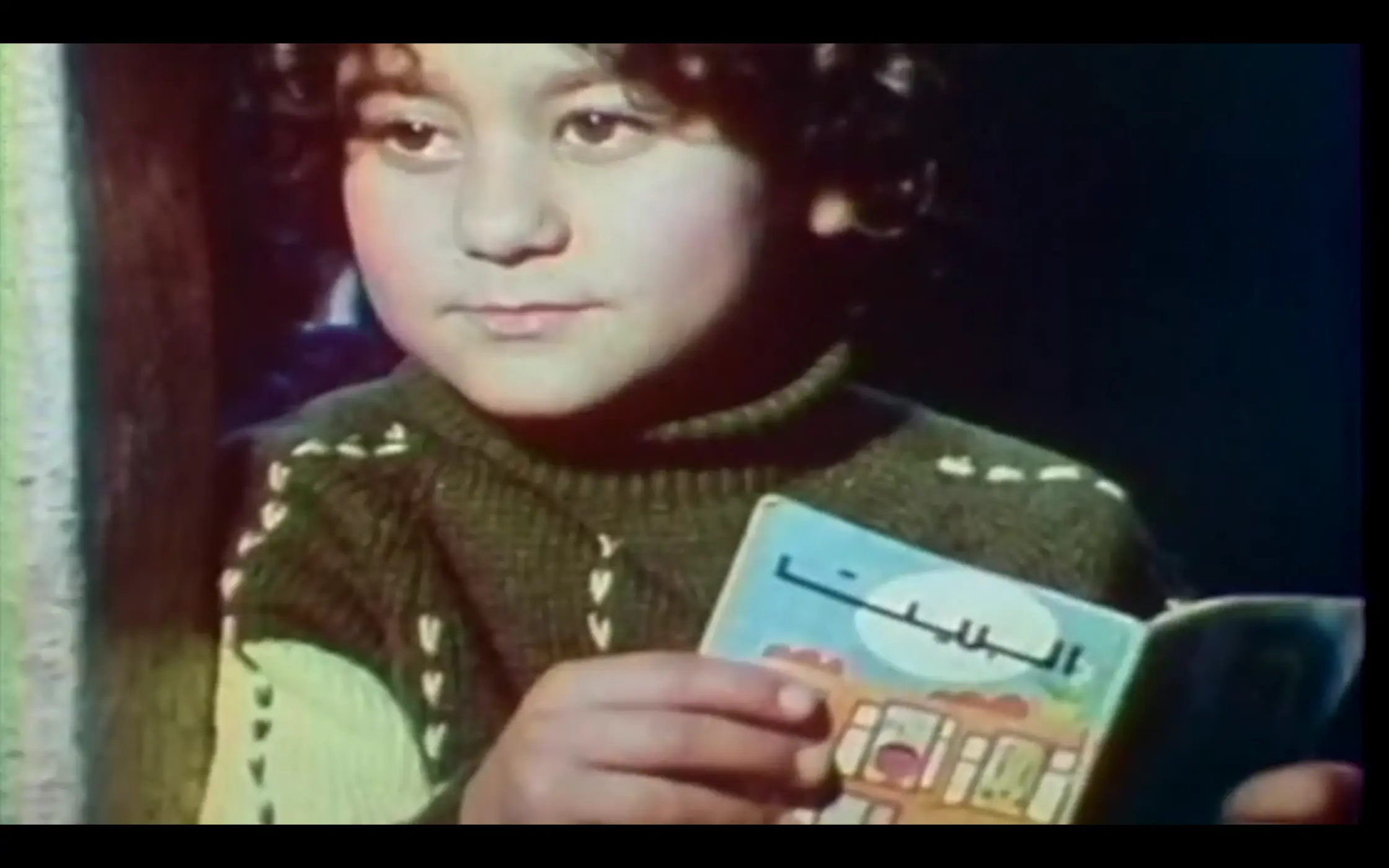
This shared political horizon and aesthetic sensibility are encapsulated in a later film project. Made in 1976, The Key (المفتاح) by Ghaleb Sha’ath takes as its starting point a book published by Dar al-Fata al-Arabi. Like Testimony of Palestinian Children in Wartime, The Key opens with the voice of a child. Here, the child begins the story by reading Al-bayt (Home) (Ref. z067) while close-ups of the book’s illustrations by Mohieddine Ellabbad fill the screen (fig. 10). The film’s title thus functions as a symbol of the Palestinian struggle to reclaim home and land and turn the page on exile.
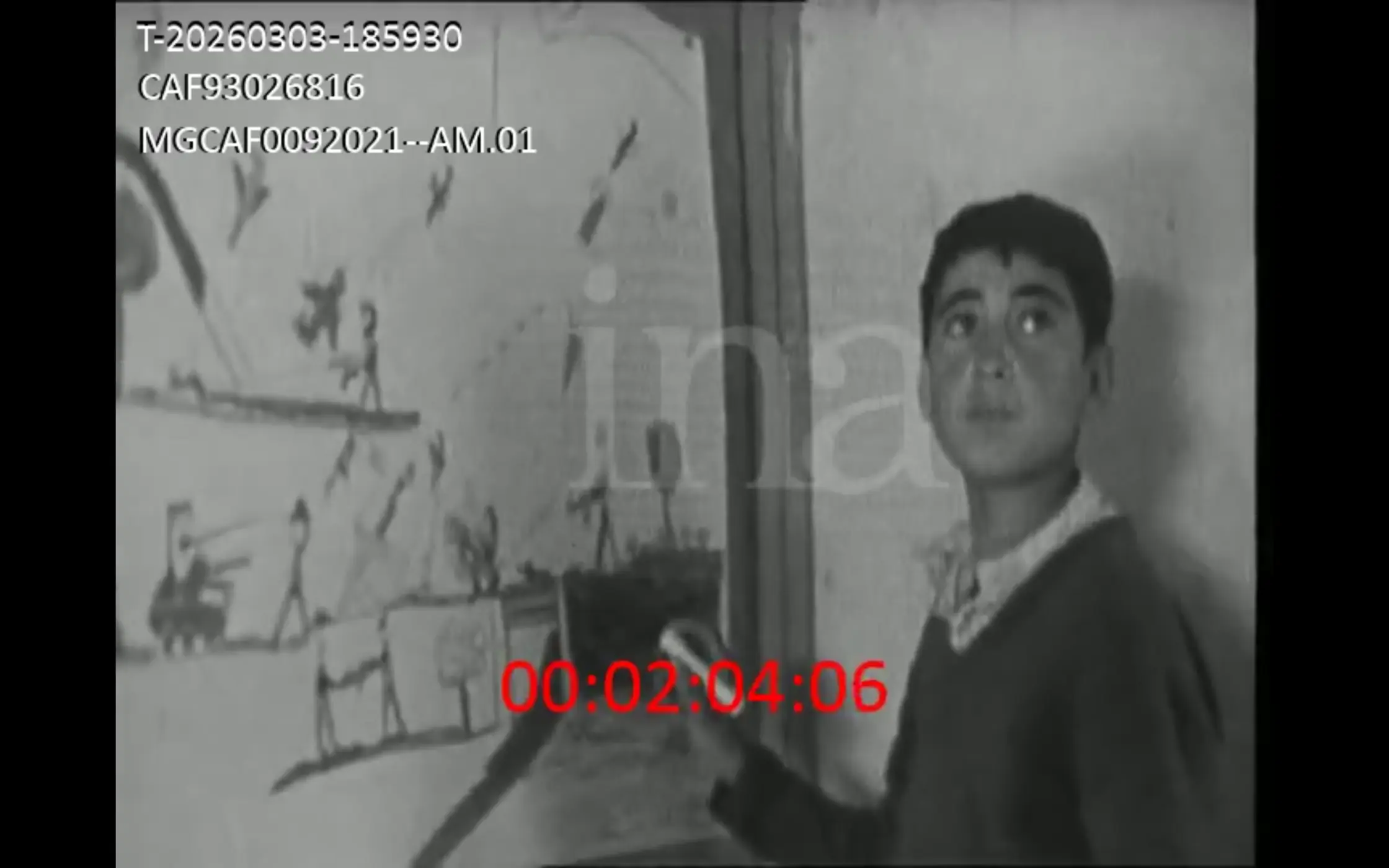
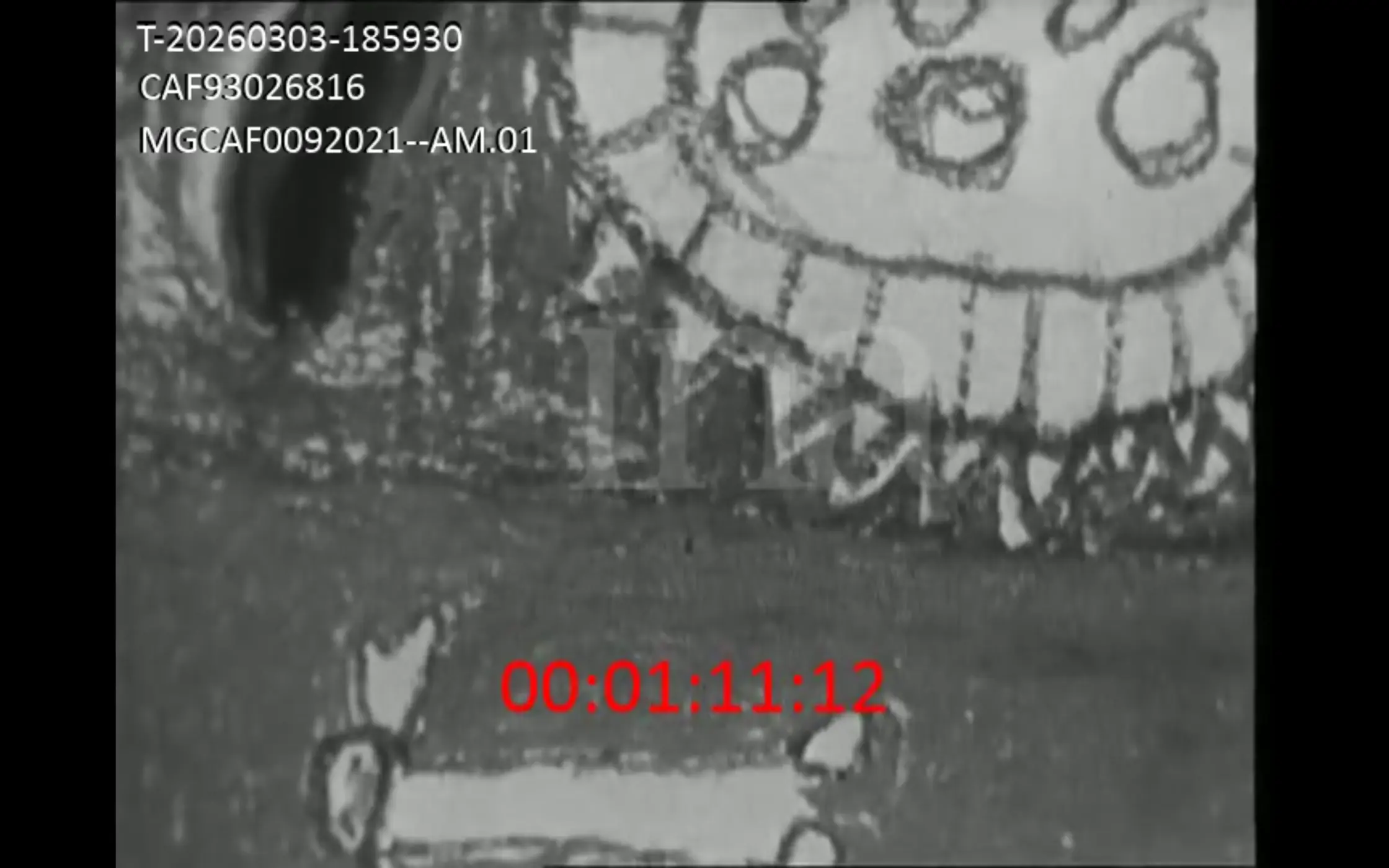
Les Enfants de la guerre (Children of War), which was broadcast on French television nearly a year before Rêves d’enfants, also begins with children’s drawings published in In Time of War Children Testify. It then turns to more conventional scenes of life in the camps, including military training and war games (a theme later presented by Lebanese filmmaker Jocelyne Saab in her own Children of War, made in 1976). Through a sound fade linking scenes from the camp to a classroom, Les Enfants de la guerre then moves from Jordan to France, revealing the reactions of children at a school in Choisy-le-Roi.
After watching the games and drawings of Palestinian children, the pupils in Choisy-le-Roi reflect on the necessity of learning self-defence and compare the situation of Palestinians to that of those facing racism in France, where people live in bidonvilles, as well as to their own circumstances. One of the pupils, Sylvie, for instance, comments: ‘They do drawings of sad things, while us, we do more drawings of joy... We imagine things that would happen in the future, while them, it’s drawings of sad things, of what’s actually happening’. At the beginning of Les Enfants de la guerre, we hear a little girl reading in French the words of Ahmed, aged eight, published in In Time of War Children Testify: ‘An Israeli tank runs over the neighbour’s little girl’ (Figs 11 and 12).
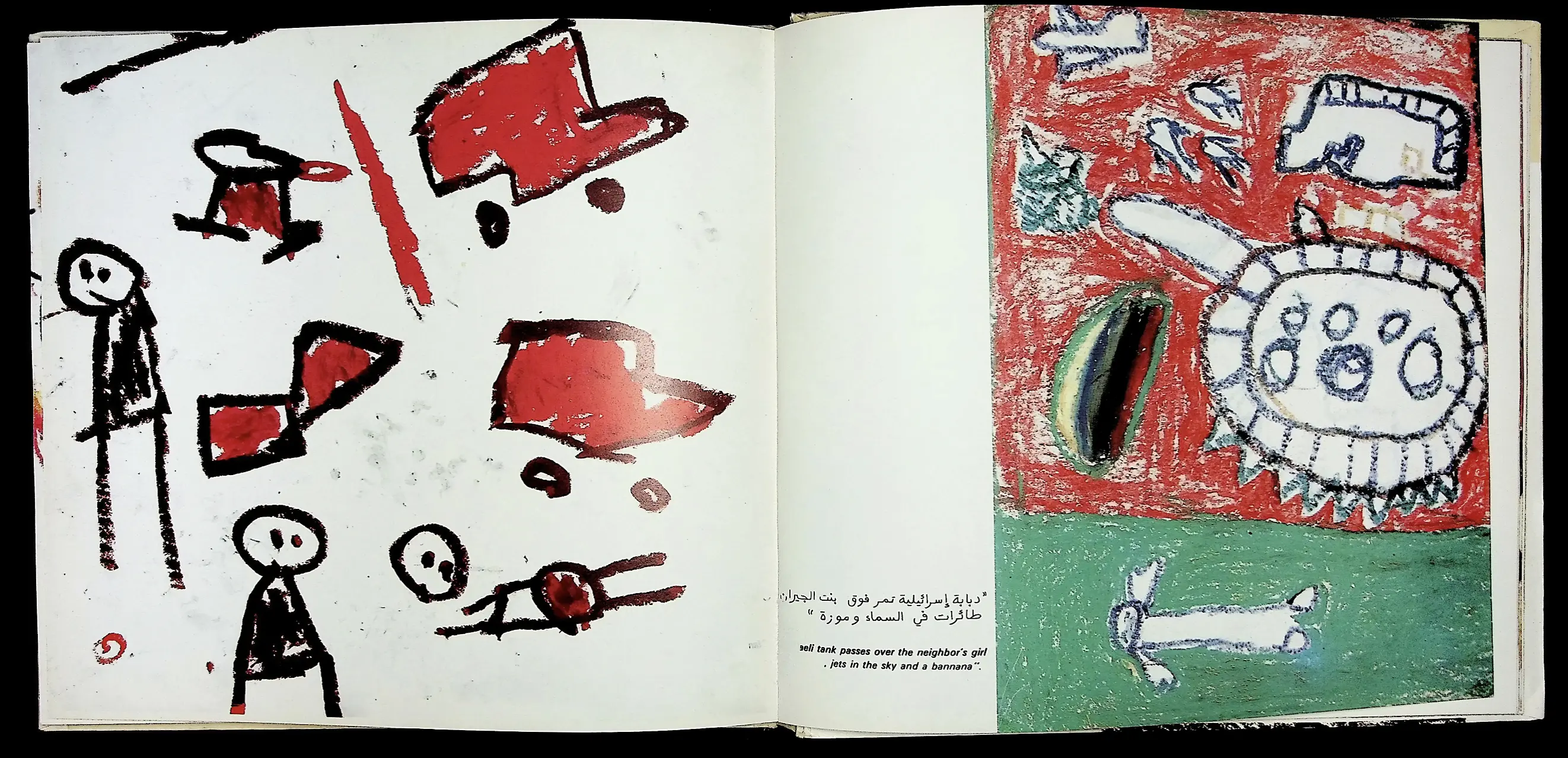
Echoing the discomfort described by Kais al-Zubaidi, the French film thus attaches new voices to the faces of Palestinian children and to their drawings, reproduced in black and white. From page to screen, and from screen to the embodied reception and reading by children performing the original words in their own language, the remediations of Mona Saudi’s book enabled the continuous transmission of Palestinian testimonies across space and time, keeping them alive.
Watching this little-known fifteen-minute audiovisual document in 2025, I found myself wondering whether the former pupils of Choisy-le-Roi—whose responses to Saudi’s remediated book were recorded in Les enfants de la guerre—might now speak again. Could their present-day adult voices carry those of Palestinian children whose lives were cut short and do so in opposition to the ongoing genocide?
Anaïs Farine is a researcher and film programmer based in Beirut. She holds a Ph.D. from Sorbonne Nouvelle University. In 2022–2023, she was a Postdoctoral Fellow at the Orient-Institut Beirut. From 2023 to 2026, she was a research consultant at Cinematheque Beirut (Metropolis Cinema). Her research examines collective practices in the making of Arab alternative cinema, with a focus on the history of the Arab Ciné Club in Beirut (1973-1982). She is a member of the organizing committee of Festival Ciné-Palestine in Paris.
Acknowledgments:
I am deeply grateful to Zeina Maasri, Reman Sadani, Mohanad Yaqubi, Hugo Darroman and Kais al-Zubaidi, for their trust, support, and intellectual companionship.
- ‘With the artist Ismail Shammout’ (مع الفنان اسماعيل شموط), al‑Akhbar, 24 November 1973, 30–31. ↩︎
- Zeina Maasri, Decolonizing the Page: A Forgotten Golden Age of Arabic Book Arts (1950s–70s), online exhibition text, introduction to the room ‘From Cover to Cover’, 2025. ↩︎
- See Jay David Bolter and Richard Grusin, Remediation. Understanding New Media, MIT Press Ed., 2000, 45. ↩︎
- For a discussion of Saudi’s book and the context of Arab art activism in relation to Palestine, see Zeina Maasri, ‘Activism and the history of graphic design: the 1960s generation of Arab artist-designers’ in this Learning Hub, published on 29/06/2026. ↩︎
- Alaa Alqaisi, ‘The double life of a Palestinian translator: A bridge between wounds and words’, 2025. ↩︎
- Mathilde Chèvre, Le poussin n’est pas un chien: Quarante ans de création arabe en littérature pour la jeunesse, reflet et projet des sociétés (Égypte, Syrie, Liban) (IFPO–IREMAM–Le Port a jauni, 2015); and Zeina Maasri, Cosmopolitan Radicalism: The Visual Politics of Beirut’s Global Sixties (Cambridge University Press, 2020). ↩︎
- ‘Beirut: A Cultural Hub (1955–1975)’, interview with Mona Saudi, Dalloul Art Foundation, 2022. ↩︎
- From conversations with the filmmaker between July 2023 and May 2025. ↩︎
- Daniel Arroyo‑Bishop, Treize minutes d’enfance palestinienne et d’avenir révolutionnaire, mémoire d’accompagnement du film 24 (Paris: Université Paris VIII, 1977). ↩︎
- After the Israeli siege of Beirut in 1982, the film archive of the Palestine Cinema Institute was relocated and considered lost for approximately thirty years. Subsequent research revealed that it had been looted and transferred to the Israeli Army Archive, where it remains today. As a result of collective investigations over the past fifteen years, many Palestinian revolutionary films have resurfaced in the archives of organizations that collaborated with the PLO, as well as in those of groups that organized solidarity screenings worldwide. See, for example, Khadijeh Habashneh, Knights of Cinema: The Story of the Palestine Film Unit (London: Palgrave Macmillan, 2023); and Hugo Darroman, ‘Towards a Decentered History of Palestinian Revolutionary Cinema? Case Study of the Film Tall El Zaatar in the Audiovisual Archives of the Italian Communist Party’, Regards 26 (2021): 111–27. ↩︎
- See articles published in the PFLP journal al‑Hadaf in November 1971 and January 1972. ↩︎
- Currently, two digital copies of the film are in circulation: one remained with the filmmaker until his death in 2024, and another was deposited by Khadijeh Habashneh at the Cinémathèque de Toulouse (France). ↩︎
- The term ‘Third Cinema’ was popularized by the Argentinian filmmakers Fernando Solanas and Octavio Getino. The movement encompasses militant, anti‑colonial, and revolutionary filmmaking practices that oppose both Hollywood (First Cinema) and European auteur cinema (Second Cinema). Palestinian films produced in Jordan, Syria, and Lebanon in the 1970s offer a concrete example of Third Cinema in practice. See Nadia Yaqub, Palestinian Cinema in the Days of Revolution (Austin: University of Texas Press, 2018); and Anaïs Farine, ‘نحو سينما ثورية / Vers un troisième cinéma: Une introduction à la traduction par Dirasat ‘arabiyya du manifeste de Fernando Solanas et Octavio Getino’, Cinematheque Beirut, 2022. ↩︎
- Stephanie Latte Abdallah, ‘UNRWA Photographs, 1950–1978: A View on History or Shaped by History?’, in Issam Nassar and Rasha Salti (eds), I Would Have Smiled: Photographing the Palestinian Refugee Experience (Institute for Palestine Studies, 2009), 43–65. ↩︎
- Anaïs Farine, ‘Avec Kais al‑Zubaidi: Retour sur un cinéma alternatif’, Écrans 12, no. 2 (2019): 195–214. Translated into Arabic as ‘مع قيس الزبيدي: إعادة النظر في السينما البديلة’, Romman. ↩︎
- Nadia Yaqub, Palestinian Cinema in the Days of Revolution, 92. ↩︎
- Mohamad Malas, Qais al‑Zubaidi: al‑haya qusassat ‘ala al‑jidar [Kais al‑Zubaidi, snippets of life against the wall] (Hachette‑Antoine, 2019), 81. ↩︎
- ‘Every Film Carries Inside It a Piece of Memory and Identity: From a Conversation with Kais al‑Zubaidi’, The World Is with Us, Palestine Film Foundation, 2014, 15. ↩︎